

Market Update For June 3, 2026
The Nigerian Exchange (NGX) sustained its bearish momentum on Wednesday, June 3, 2026, as investors continued profits taking in several large and mid-cap stocks, thereby extending the market’s recent corrective trend. The negative sentiment persisted across key sectors of the market, with banking, industrial goods, consumer goods, insurance and telecommunications stocks witnessing heightened selling pressure.
The market’s decline came amid ongoing portfolio rebalancing by institutional and retail investors following the transition to the T+1 settlement cycle, a development that has improved market efficiency but also encouraged faster profit realization in stocks that had recorded substantial gains in recent months. The sustained selloff underscores investors’ cautious approach as they seek to protect gains accumulated during the market’s impressive rally earlier in the year.
Throughout the trading session, market participants remained largely on the sell side, resulting in widespread price declines across major counters. The pullback reflects a healthy correction in some respects, considering the significant appreciation recorded by many stocks since the beginning of the year. However, the intensity of the selloff indicates that investors remain sensitive to valuation concerns and are increasingly selective in deploying fresh funds.
Despite the negative market close, trading activity strengthened considerably as investors repositioned their portfolios. The increase in transaction volume and value suggests that while some investors are exiting positions to lock in gains, others are taking advantage of lower prices to accumulate fundamentally sound stocks with strong earnings prospects. This mixed sentiment continues to define the current market environment, where profit-taking and bargain hunting coexist.
The banking sector remained under pressure, with several tier-one and tier-two lenders recording losses. Stocks such as UBA, GTCO, FIDELITYBK and ZENITHBANK closed lower as investors booked profits after their strong performance in recent months. The industrial goods segment was also affected by selloffs in heavyweight stocks, particularly WAPCO, which emerged as the worst-performing stock of the session. Consumer goods and telecommunications counters were not spared, with NB and MTNN contributing significantly to the market’s decline.
Notwithstanding the broad weakness, selective buying interest persisted in a few stocks. INTENEGINS attracted notable demand and traded above its 52-week high of N5.46 to close at N6.00, highlighting investors’ continued appetite for growth and momentum stocks. Several other counters also recorded impressive gains, demonstrating that opportunities remain available for investors willing to look beyond the broader market weakness.
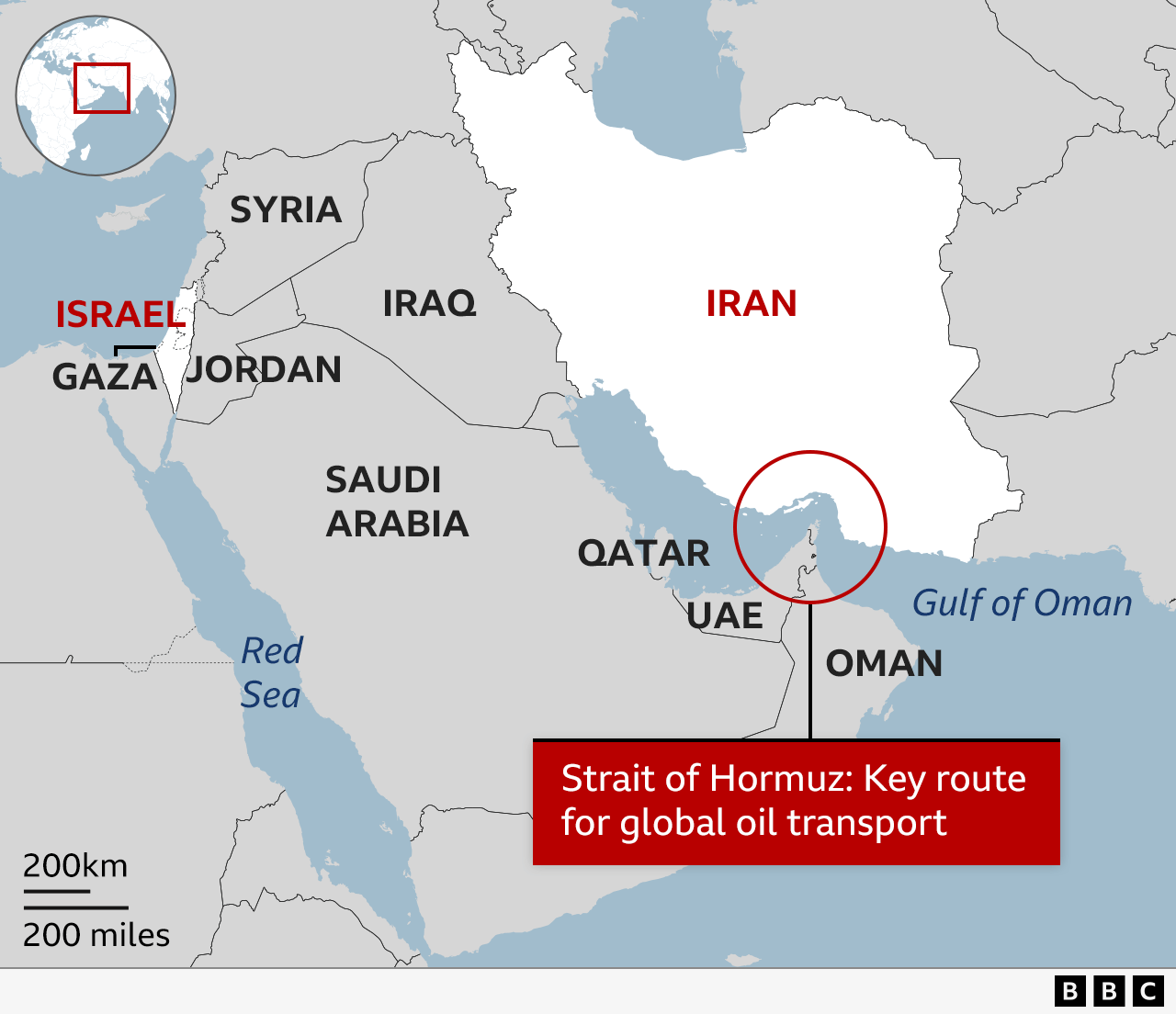
Meanwhile, developments in the global energy market provided a supportive backdrop for oil-related stocks and Nigeria’s macroeconomic outlook. Crude oil prices advanced by about 2% during the day, extending gains from the previous session as renewed geopolitical tensions in the Middle East raised concerns about potential supply disruptions. Brent crude traded at $97.70 per barrel, while West Texas Intermediate (WTI) crude rose to $95.68 per barrel. Higher oil prices are generally positive for Nigeria’s external reserves, government revenues and foreign exchange earnings, although they may also contribute to inflationary pressures globally.
The resilience of oil prices remains a key factor for investors tracking the performance of energy stocks and the broader economy. As one of Africa’s leading oil producers, Nigeria stands to benefit from sustained strength in crude prices, particularly at a time when fiscal authorities are seeking to strengthen revenue generation and improve economic stability.
Technical Analysis and Market Outlook
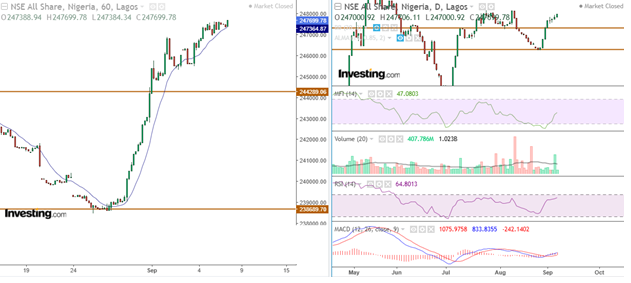
From a technical perspective, the market remains in a corrective phase following its extended bullish run. The benchmark index closed lower for another consecutive session, reflecting sustained profit-taking and weakening short-term momentum. The decline was accompanied by a significant increase in trading volume, an indication that sellers remain active and continue to dominate market direction in the near term.
Market breadth also remained firmly negative, confirming the broad-based nature of the decline. The ratio of losers to gainers suggests that selling pressure was not limited to a handful of stocks but spread across multiple sectors and market capitalizations. This trend points to cautious investor sentiment and a temporary shift away from aggressive risk-taking.
However, despite the recent weakness, the broader market structure remains positive. The NGX has delivered one of its strongest performances in recent years, and the current correction may be viewed as a normal retracement within a longer-term upward trend. Investors with medium- to long-term horizons may find opportunities in quality stocks that have seen their prices decline due to short-term profit-taking rather than deteriorating fundamentals.
In the coming sessions, market direction is likely to be influenced by institutional portfolio adjustments, earnings expectations, developments in the fixed-income market, liquidity conditions and global commodity price movements. Investors are expected to maintain a selective approach, focusing on fundamentally strong companies with resilient earnings outlooks, attractive dividend yields and sustainable growth prospects.
The emergence of bargain hunters at lower price levels could help moderate the current bearish sentiment. Nevertheless, volatility is expected to remain elevated as market participants continue to digest recent gains and reposition for the next phase of market movement.
The NGX All-Share Index (ASI) declined by 1.44% to close at 243,132.61 points from 246,686.66 points recorded in the previous session, while market capitalization fell by N2.28 trillion. Consequently, the market’s year-to-date return moderated to 56.24%. Market breadth closed negative at 43 decliners against 15 gainers, highlighting the dominance of selling pressure. On the gainers’ table, ABBEYBDS advanced by 10.00% to close at N13.20, INTENEGINS rose by 9.89% to N6.00, MAYBAKER gained 9.88% to N17.80, ETRANZACT appreciated by 9.80% to N11.20, LEARNAFRCA added 9.79% to N5.72, OMATEK increased by 9.62% to N1.14, RTBRISCOE rose 8.96% to N3.16, JOHNHOLT gained 7.89% to N11.50, DEAPCAP appreciated by 7.69% to N1.12, while CHAMS advanced 6.45% to N3.30. Leading the losers’ chart was WAPCO, which shed 9.97% to close at N122.00, followed by NEM which declined 8.81% to N18.10, NGXGROUP down 7.71% to N44.90, MTNN losing 6.95% to N445.00, FIRSTHOLDCO falling 6.80% to N40.45, TIP dropping 6.74% to N7.33, NB declining 4.13% to N62.70, CWG shedding 3.70% to N15.60, UBA losing 3.15% to N42.25 and TRANSCORP dropping 2.50% to N72.20. Other notable laggards included GTCO (-1.91%), FIDELITYBK (-1.90%), ZENITHBANK (-1.05%), OANDO (-0.62%), PZ (-0.45%) and REDSTAREX (-0.16%). Trading activity improved markedly, with total volume traded rising 28.42% to 922.97 million shares valued at N42.27 billion in 69,332 deals. STERLINGNG led the volume chart with 264.59 million shares, accounting for 28.67% of total market volume, while MTNN topped the value chart with transactions worth N17.61 billion, representing 41.67% of total traded value. ACCESSCORP and LINKASSURE accounted for 8.31% and 5.97% of total volume respectively, while ZENITHBANK and ARADEL ranked behind MTNN in value contribution.