

Market Update For June 19, 2026
The Nigerian Exchange (NGX) wrapped up the third week of June on a bearish note, extending its losing streak to six consecutive trading sessions amid sustained profit-taking in highly capitalized stocks across major sectors of the market. The prolonged pullback was despite intermittent bargain hunting in select counters, as investors remained cautious following the market’s impressive rally in recent months.
The local bourse has witnessed increased volatility in recent sessions as market participants continue to reassess positions after the benchmark index climbed to historic highs earlier in the month. While the broader market outlook remains positive, the recent wave of profit-taking reflects a natural correction following months of strong gains that pushed valuations higher across several sectors.
Investor sentiment during the session was largely shaped by selloffs in fundamentally sound banking, industrial and consumer goods stocks. The banking sector, which has been one of the primary drivers of the market’s remarkable performance this year, experienced significant pressure as investors took profits in major counters. Heavyweight stocks such as GTCO, FIRSTHOLDCO, ZENITHBANK, UBA and ACCESSCORP recorded notable losses, dragging the broader market lower. The industrial goods segment was also affected as WAPCO extended its recent decline, while consumer goods stocks including DANGSUGAR remained under pressure.
The persistent weakness in banking stocks suggests that investors are increasingly adopting a wait-and-see approach ahead of the release of half-year corporate earnings and potential dividend announcements. Market participants are also closely monitoring developments in monetary policy and the fixed-income market, where elevated yields continue to present attractive alternatives for risk-averse investors.
Despite the bearish close, analysts believe the current market correction does not necessarily signal a reversal of the broader uptrend. Rather, it reflects a period of consolidation and profit-taking after the strong rally witnessed since the beginning of the year. The robust earnings performance delivered by many listed companies, combined with expectations of improved economic activity, continues to provide fundamental support for the equities market.
The decline in trading activity further reinforced the view that the ongoing selloff is primarily profit-driven rather than panic-induced. Investors appeared selective in their trading decisions, focusing on preserving gains while gradually identifying opportunities in undervalued stocks. Institutional investors remained active in selected counters, while retail participation moderated compared to previous sessions.
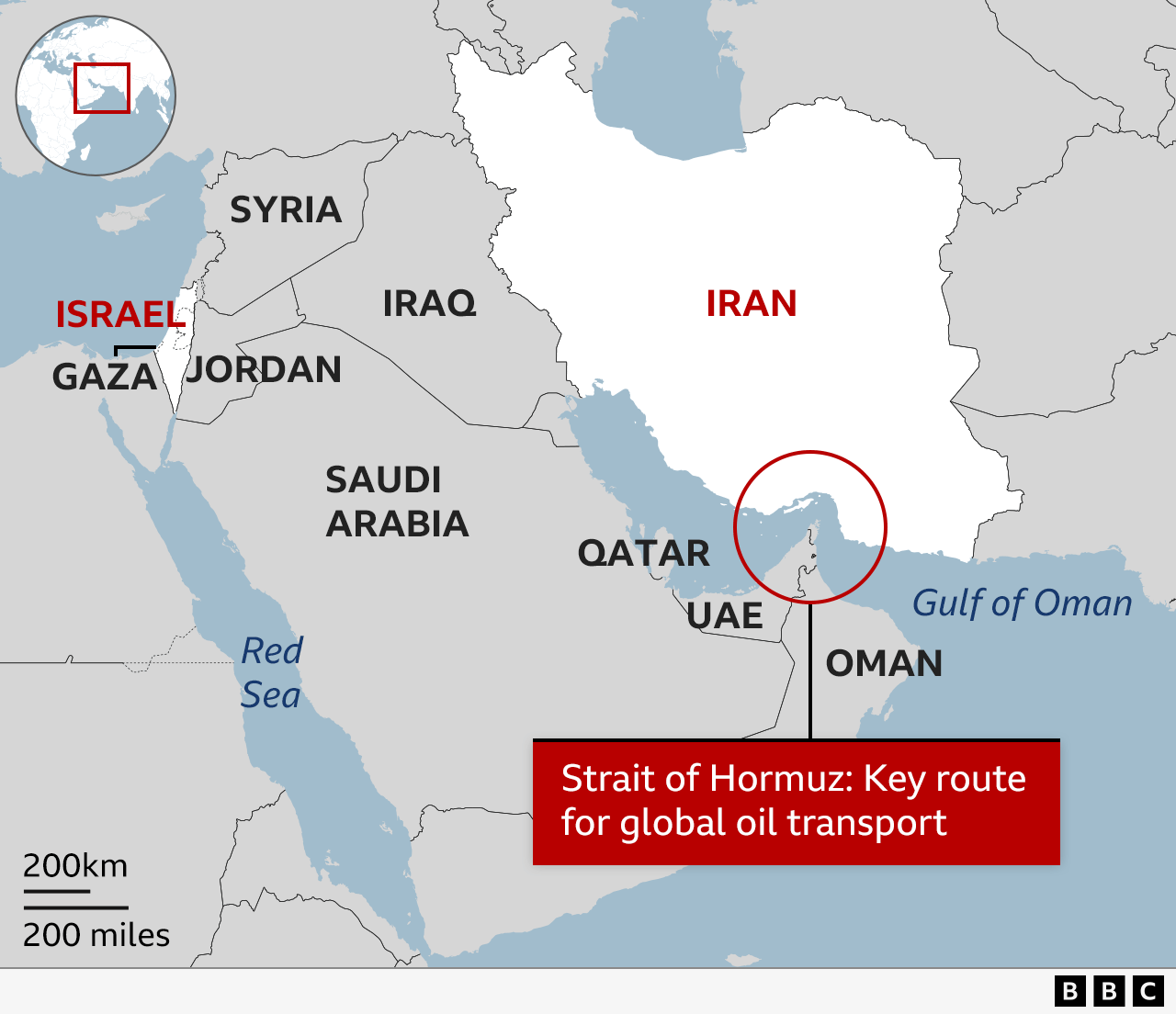
Beyond domestic factors, global developments also influenced investor sentiment. International financial markets remained focused on geopolitical events in the Middle East, particularly the ceasefire agreement between Israel and Hezbollah, which contributed to a sharp decline in crude oil prices during the week. The easing of geopolitical tensions reduced concerns over potential disruptions to global oil supplies, resulting in a moderation of the risk premium that had previously supported crude prices.
Brent crude futures traded slightly higher on Friday, gaining 20 cents or 0.25% to $80.05 per barrel, while U.S. West Texas Intermediate crude rose 25 cents or 0.33% to $76.85 per barrel. However, both benchmarks remained on course for weekly losses exceeding 8% following the ceasefire agreement and the reopening of key shipping routes through the Strait of Hormuz. Increased tanker traffic and expectations of higher exports from Gulf producers further strengthened the global supply outlook.
Data from MarineTraffic showed that several tankers carrying crude oil, refined products and liquefied petroleum gas passed through the Strait of Hormuz after the agreement, easing concerns about supply bottlenecks. Market analysts noted that the gradual normalization of shipping activities could accelerate the movement of previously delayed cargoes, contributing to improved supply conditions in the global energy market.
For Nigeria, developments in the oil market remain particularly significant given the country’s dependence on crude oil exports for foreign exchange earnings and fiscal revenue. Although crude prices have retreated from recent highs, the current price level remains supportive of government revenue projections and external reserve accretion. Nonetheless, investors will continue to monitor oil market dynamics closely, as prolonged weakness could affect fiscal balances and investor confidence in energy-related stocks.
The macroeconomic environment also remains a key consideration for investors. Inflationary pressures, elevated interest rates and foreign exchange challenges continue to shape investment decisions across asset classes. While reforms implemented by policymakers have improved investor confidence and attracted fresh interest to the equities market, concerns over purchasing power and business costs remain relevant factors influencing corporate performance.
Market participants are increasingly focused on corporate fundamentals as they navigate the current correction. Companies with strong earnings growth, healthy cash flows, consistent dividend histories and resilient business models are expected to remain attractive despite short-term market volatility. The ongoing pullback may therefore provide an opportunity for long-term investors to accumulate quality stocks at discounted prices.
Sectoral performance reflected the broad-based nature of the selloff. Banking stocks accounted for a significant share of total trading volume and were among the biggest contributors to the market’s decline. Industrial goods stocks also weakened, while consumer goods counters witnessed mixed performance. The oil and gas sector remained relatively stable, supported by expectations of sustained energy demand despite recent weakness in crude prices.
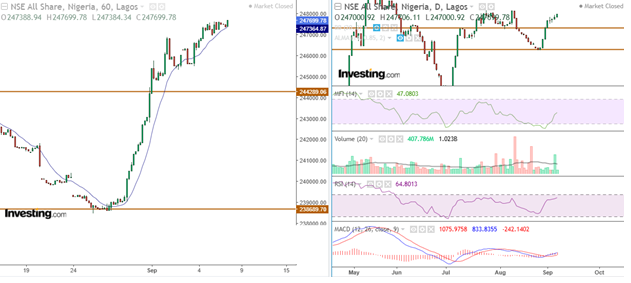
From a technical standpoint, the market remains in a corrective phase following its historic rally. The benchmark index has now recorded six consecutive sessions of decline, indicating sustained profit-taking pressure and weakening short-term momentum. The All-Share Index has slipped below important near-term support levels, while momentum indicators continue to trend lower. However, the broader trend remains firmly bullish as the market continues to trade above major medium- and long-term moving averages.
The Relative Strength Index (RSI) and other momentum indicators are gradually approaching oversold territory, suggesting that the intensity of the selloff may begin to moderate. Historically, such conditions have often attracted bargain hunters seeking opportunities in fundamentally sound stocks. Consequently, market watchers expect increased selective buying if valuations become sufficiently attractive.
Looking ahead, investors are expected to maintain a cautious stance while monitoring key catalysts, including macroeconomic data releases, monetary policy decisions, corporate earnings reports and developments in the global oil market. The earnings season, in particular, could provide fresh direction for the market as investors assess the ability of listed companies to sustain growth amid economic headwinds.
In the near term, market sentiment is likely to remain mixed as profit-taking competes with bargain hunting. However, the resilience of corporate earnings, attractive dividend expectations and improving economic fundamentals could support a return to positive momentum once the current correction runs its course. Investors with a medium- to long-term horizon may continue to focus on quality stocks with strong growth prospects and sustainable shareholder returns.
At the close of trading, the NGX All-Share Index (ASI) declined by 1,463.65 basis points, representing a loss of 0.62%, to settle at 235,941.27 points from 237,404.92 points recorded in the previous session. Consequently, market capitalization depreciated by N938.75 billion to close at N148.96 trillion, while the market’s year-to-date return moderated to 51.62%. Market breadth remained negative with 21 gainers against 31 decliners, highlighting the prevailing bearish sentiment. DEAPCAP topped the gainers’ chart with a 10.00% appreciation to close at N1.10 per share, followed by MEYER which gained 9.97% to N17.54, CUSTODIAN which advanced 9.94% to N26.00, CHAMS which rose 9.92% to N3.99, AFRINSURE which appreciated 9.89% to N1.89, REDSTAREX which added 9.87% to N8.57, EUNISELL which gained 9.79% to N16.25, LIVESTOCK which rose 9.76% to N11.25, MCNICHOLS which advanced 9.68% to N2.38 and LEARNAFRCA which appreciated 8.96% to N6.08. On the losers’ chart, NAHCO and ROYALEX led with losses of 10.00% each to close at N108.00 and N1.08 respectively, followed by GTCO which declined 9.97% to N92.50, FIRSTHOLDCO which shed 9.84% to N37.15, ELLAHLAKES which lost 9.79% to N8.20, SOVRENINS which fell 9.62% to N1.88, AIICO which dropped 9.39% to N1.93, UPDCREIT which declined 9.38% to N5.80, THOMASWY which lost 8.96% to N2.54 and WAPCO which depreciated by 4.52% to N112.00 per share. AFRIPRUD also remained under pressure, trading below its 52-week low of N12.00 at N11.70. Trading activity weakened significantly as total volume traded declined by 36.33% to 440.36 million shares valued at N24.68 billion in 50,273 deals. ACCESSCORP led the volume chart with 64.97 million shares, accounting for 14.75% of total volume traded, while ZENITHBANK and STERLINGNG accounted for 7.99% and 6.46% respectively. In value terms, MTNN dominated with transactions worth N4.64 billion, representing 18.78% of total market value traded, while ZENITHBANK and ARADEL followed among the most actively traded equities by value.