

Market Update For June 18, 2026
The Nigerian Exchange (NGX) extended its losing streak on Thursday, June 18, 2026, as aggressive profit-taking in blue-chip and mid-cap stocks continued to overshadow bargain hunting, resulting in a fifth consecutive session of losses. The persistent decline reflects a market undergoing a healthy but intense correction after months of remarkable gains that had pushed many equities to new highs and significantly increased investors’ portfolio values.
Thursday’s trading session was characterized by broad-based weakness across key sectors of the market, with investors reducing exposure to several stocks that had previously enjoyed strong price appreciation. The selloff was particularly evident in banking, industrial goods, consumer goods and insurance counters, where investors took advantage of previous rallies to lock in profits. The absence of sufficient buying support in major market movers further accelerated the downward trend, leading to another sharp decline in the benchmark index.
The current market mood suggests that investors are becoming more selective in their investment decisions as they await fresh catalysts capable of sustaining the bullish momentum that dominated the first half of the year. While the market’s long-term outlook remains positive, the recent wave of profit-taking indicates a natural pause as investors reassess valuations, macroeconomic conditions and corporate earnings expectations.
The banking sector, which has been one of the strongest performers in the market over the past year, witnessed renewed sell pressure as investors trimmed positions in Tier-1 and Tier-2 banking stocks. Access Holdings, Zenith Bank, United Bank for Africa, GTCO and Wema Bank all closed lower as investors rotated funds into cash and other opportunities. The sector’s recent rally had been driven by strong earnings growth, improved interest income and optimism surrounding banking recapitalization efforts. However, the current correction suggests that many investors are taking a cautious approach ahead of half-year earnings releases.
Similarly, industrial goods stocks faced significant selling pressure, with Dangote Cement emerging as one of the major contributors to the market’s decline. Despite its strong fundamentals and dominant position within the sector, the stock witnessed profit-taking activities that weighed heavily on overall market performance due to its large capitalization and influence on the benchmark index. Consumer goods counters were not spared either, as Cadbury Nigeria, Dangote Sugar and Nigerian Breweries recorded notable declines amid widespread portfolio rebalancing.
The insurance sector also experienced considerable weakness, with NEM Insurance among the worst-performing stocks of the day. The decline in insurance stocks reflects a broader market sentiment where investors are prioritizing profit preservation over aggressive risk-taking. Meanwhile, Afriprud’s decline below its 52-week low highlights the extent of the bearish sentiment currently affecting some segments of the market.
Despite the sustained downturn, market activity remained robust, indicating that investors are actively repositioning rather than abandoning the equity market. The increase in trading volume and value suggests that institutional investors continue to participate in the market, albeit with a more defensive strategy. This trend is particularly important because it indicates that liquidity remains strong and that the current decline is driven more by portfolio adjustments than by a deterioration in market fundamentals.
The substantial value traded in Dangote Cement points to strong institutional participation during the session. Large-value transactions in the stock suggest that fund managers and high-net-worth investors remain engaged in the market, taking advantage of liquidity opportunities while adjusting portfolio allocations. Likewise, the significant volume traded in First HoldCo and Access Holdings reflects sustained investor interest in banking stocks despite the prevailing weakness.
A closer examination of market breadth reveals the depth of the current correction. With losers significantly outnumbering gainers, selling pressure remained widespread across the exchange. Such market breadth readings often indicate short-term weakness but can also signal the emergence of attractive entry opportunities for long-term investors. Historically, periods of extensive profit-taking have often been followed by renewed accumulation once valuations become more compelling.
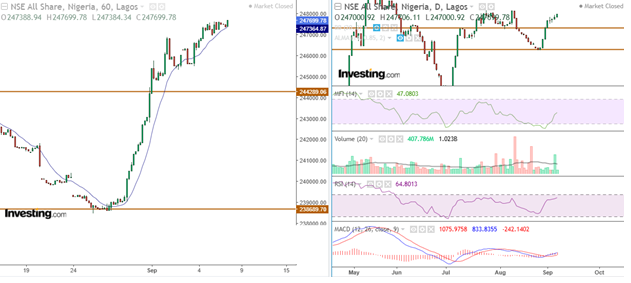
From a technical standpoint, the NGX All-Share Index continues to trade within a corrective channel after reaching record highs earlier in the year. The index has now breached several short-term support levels, confirming a near-term bearish trend and increasing the likelihood of further volatility in the sessions ahead. Momentum indicators have weakened considerably, reflecting the dominance of sellers and the reduction in buying conviction.
However, the ongoing decline has also pushed several stocks closer to attractive valuation levels. Technical indicators suggest that the market is approaching oversold territory, a condition that often attracts bargain hunters and value investors. If buying interest returns to fundamentally strong stocks, the market could witness a relief rally in the coming sessions. Such a rebound would likely be driven by investors seeking to capitalize on discounted prices ahead of anticipated earnings releases and dividend announcements.
The outlook for the market remains tied to several key factors, including corporate earnings performance, monetary policy developments, inflation trends and liquidity conditions. Investors will also continue to monitor developments in the foreign exchange market and broader macroeconomic environment, both of which have significant implications for corporate profitability and investor confidence.
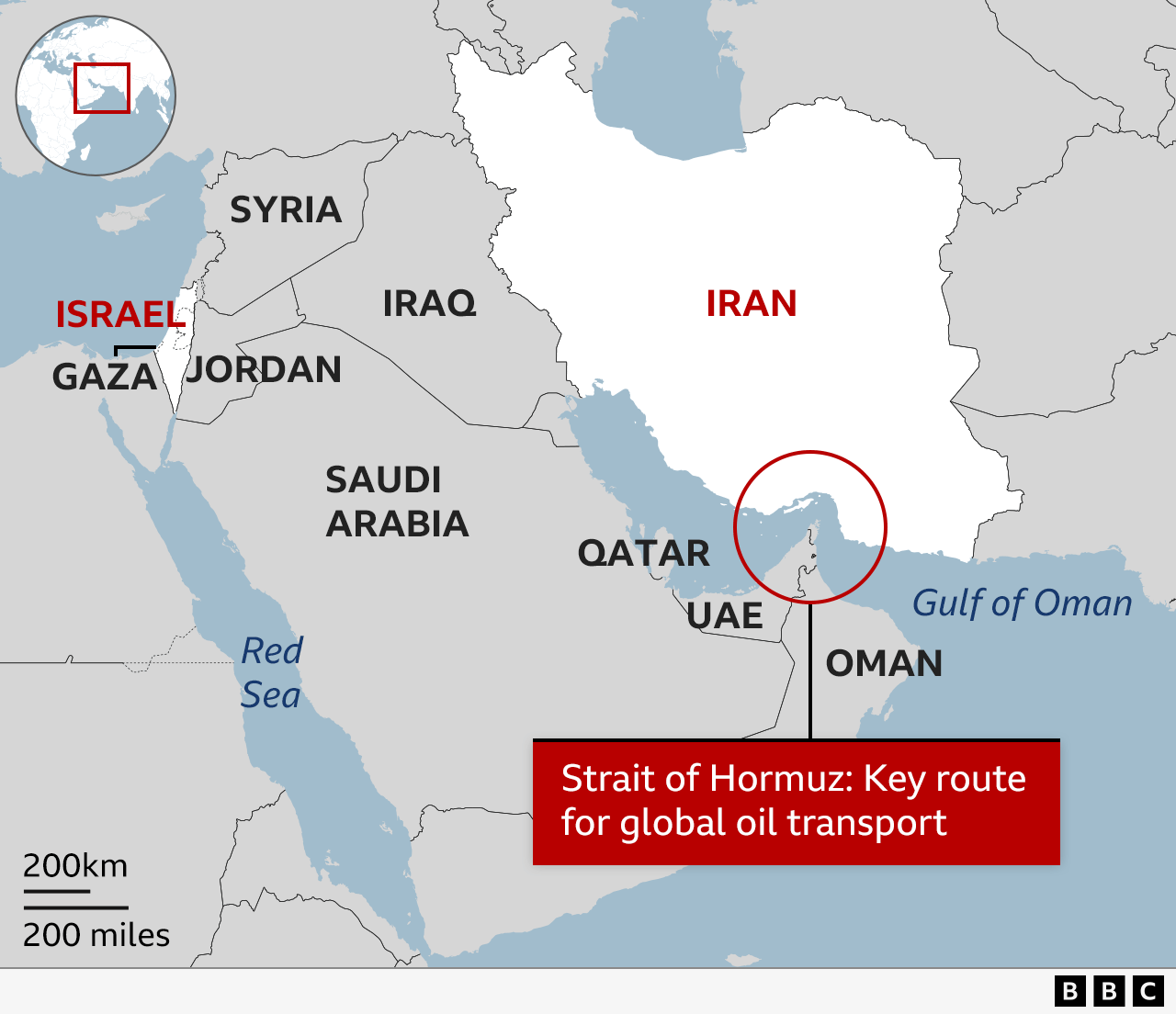
Global developments also influenced sentiment during the session, particularly in the energy market. Crude oil prices declined sharply after reports of a preliminary agreement between the United States and Iran aimed at easing geopolitical tensions and restoring normal shipping operations through the Strait of Hormuz. The development significantly improved expectations for global oil supply and reduced fears of potential disruptions that had previously supported higher oil prices.
Brent crude dropped below $79 per barrel, while West Texas Intermediate fell below $75 per barrel as traders aggressively priced in the possibility of additional Iranian crude entering the global market. The agreement reportedly includes a 60-day negotiation period and measures designed to facilitate the restoration of full shipping capacity through the strategic waterway. While many of the more difficult issues remain unresolved, the development has eased concerns surrounding global energy supplies.
For Nigeria, lower oil prices present both opportunities and challenges. While easing energy costs could help moderate inflationary pressures globally, a prolonged decline in crude prices may affect government revenue, foreign exchange inflows and fiscal projections. Consequently, investors in the Nigerian market will continue to monitor developments in the oil market closely, given the sector’s importance to the country’s economic stability.
Looking ahead, the market is expected to remain driven by a combination of profit-taking, bargain hunting and portfolio repositioning. While short-term sentiment remains weak, underlying market fundamentals continue to support a constructive medium-to-long-term outlook. Investors are therefore likely to focus on fundamentally sound companies with strong earnings growth potential, resilient cash flows and attractive dividend prospects as they navigate the current correction phase.
The market’s ability to stabilize around current levels will depend largely on renewed institutional buying interest and positive earnings surprises in the weeks ahead. Should these catalysts emerge, the current pullback may ultimately present an opportunity for investors seeking long-term value creation within the Nigerian equity market.
At the close of trading, the NGX All-Share Index declined by 1.41% to 237,404.92 basis points from the previous day’s 240,802.72 points, extending the market’s losing streak to five consecutive sessions. Market capitalization fell by N2.18 trillion, while the year-to-date return moderated to 52.56%. Total volume traded rose by 4.33% to 691.64 million shares valued at N116.85 billion exchanged in 50,025 deals. Market breadth closed negative at 13 gainers against 40 losers, underscoring the dominance of bearish sentiment. First HoldCo led the volume chart with 115.84 million shares, accounting for 16.75% of total volume traded, while Access Holdings and Dangote Cement contributed 15.85% and 10.33% respectively. Dangote Cement dominated value turnover with N83.39 billion, representing 71.37% of total market value traded, followed by First HoldCo and MTN Nigeria. On the gainers’ chart, Legend Internet advanced by 10.00% to close at N8.25. On the losers’ table, Afriprud fell by 10.00% to N11.70, trading below its 52-week low of N12.00, while Cadbury Nigeria and Tripple Gee also declined by 10.00% each. NEM Insurance lost 9.09%, Dangote Sugar shed 6.54%, NGX Group dropped 4.65%, Dangote Cement fell 3.60%, Oando declined 3.19%, Zenith Bank depreciated by 2.94%, Wema Bank lost 2.50%, Stanbic IBTC Holdings fell 2.16%, Access Holdings shed 2.13%, UBA dropped 1.94%, TIP declined 1.55%, Nigerian Breweries fell 1.25%, while GTCO closed 0.50% lower.