
Market Update for June 24, 2026
The Nigerian Exchange (NGX) witnessed a dramatic reversal of fortune on Wednesday as a wave of profit-taking swept across the market, ending the two-day bullish run that had pushed equities to fresh all-time highs. The broad-based selloff resulted in the largest single-day decline in market capitalization recorded in 2026, wiping out N3.64 trillion from investors’ portfolios and dragging the benchmark index sharply lower.
The correction came after weeks of sustained gains that had seen the market consistently break new records amid improving liquidity, strong institutional participation, portfolio rebalancing activities and growing optimism surrounding corporate earnings prospects. However, Wednesday’s session highlighted the reality that every bull market experiences periods of consolidation, especially after an extended rally that leaves many stocks trading at elevated valuations.
Investor sentiment turned negative from the opening bell as sell orders dominated trading activities across major sectors. The industrial goods segment bore the brunt of the pressure, while significant declines in banking, insurance, consumer goods and energy stocks further reinforced the bearish mood. The selloff spread rapidly across the market as traders moved to secure profits accumulated over recent months, leading to a broad market correction.
The sharp decline in market heavyweight stocks played a major role in the market’s performance. BUA Cement and Dangote Cement, two of the most influential stocks on the NGX, both recorded maximum daily losses of 10.00%, significantly weighing on the benchmark index. Geregu Power also shed 10.00%, extending its recent downtrend and amplifying the market’s losses.
Other notable decliners included Custodian Investment Plc, which lost 9.97%, while TIP declined by 3.45%. Oando dropped 3.00%, Zenith Bank fell 2.88%, Wema Bank shed 2.76%, Nigerian Breweries lost 0.95%, Dangote Sugar declined 0.91%, while UBA eased by 0.50%. The weakness across these stocks reflected the broad-based nature of the profit-taking activity that dominated the session.
The market decline was not entirely unexpected given the strong rally witnessed since the beginning of the year. Many investors had accumulated substantial gains following the impressive performance of banking stocks, industrial counters, telecommunications companies and selected growth stocks. As a result, the temptation to lock in profits intensified as valuations reached new highs and technical indicators signaled an overbought market condition.
Analysts also noted that the ongoing portfolio repositioning ahead of the half-year earnings season contributed to the selloff. Institutional investors often rebalance portfolios during periods of strong appreciation, taking profits from outperforming stocks and reallocating funds into undervalued opportunities expected to benefit from upcoming earnings releases.
Despite the overwhelming bearish sentiment, pockets of buying interest remained visible in select stocks. SKYAVN continued its remarkable run, emerging as the best-performing stock of the session and closing at N171.20, surpassing its previous 52-week high of N164.95. The stock’s resilience in the face of market-wide weakness underscores the presence of strong investor demand and confidence in its growth outlook.
On the other hand, Geregu Power remained under intense pressure, trading below its 52-week low of N1,019.30 to close at N917.40. The stock’s continued decline signals persistent bearish sentiment and highlights the extent of investor concerns surrounding its near-term outlook.
The market breadth reading further confirmed the weakness that characterized the session. A total of 38 stocks closed lower compared to just 17 gainers, reflecting widespread selling pressure across virtually every segment of the market. Such a negative breadth reading often signals a broad market correction rather than isolated weakness in a few heavyweight stocks.
Trading activity remained relatively robust despite the bearish outcome, indicating that investors were actively adjusting positions rather than exiting the market entirely. Total volume traded declined by 13.60% compared to the previous session but still stood at a healthy 488.08 million shares. The shares exchanged were valued at N20.93 billion across 46,239 deals, demonstrating continued investor participation.
FIRSTHOLDCO emerged as the most actively traded stock by volume, accounting for 57.39 million shares or 11.76% of total market volume. The stock maintained its position as a preferred choice among traders due to its liquidity and ongoing market interest.
CHAMS followed closely, contributing 8.67% of total market volume, while ACCESSCORP accounted for 7.39%. The dominance of these stocks on the volume chart reflects continued investor interest in financial services and technology-related counters despite the broader market weakness.
In terms of value traded, Geregu Power topped the chart with transactions worth N3.67 billion, representing 17.55% of total market turnover. FIRSTHOLDCO and MTNN also ranked among the most valuable stocks traded during the session, highlighting institutional activity in large-cap counters.
The decline in equities coincided with renewed weakness in the international crude oil market, a development closely watched by investors given Nigeria’s dependence on oil exports. Brent crude futures fell by more than 4% to $73.76 per barrel, while West Texas Intermediate (WTI) crude declined to $70.19 per barrel.
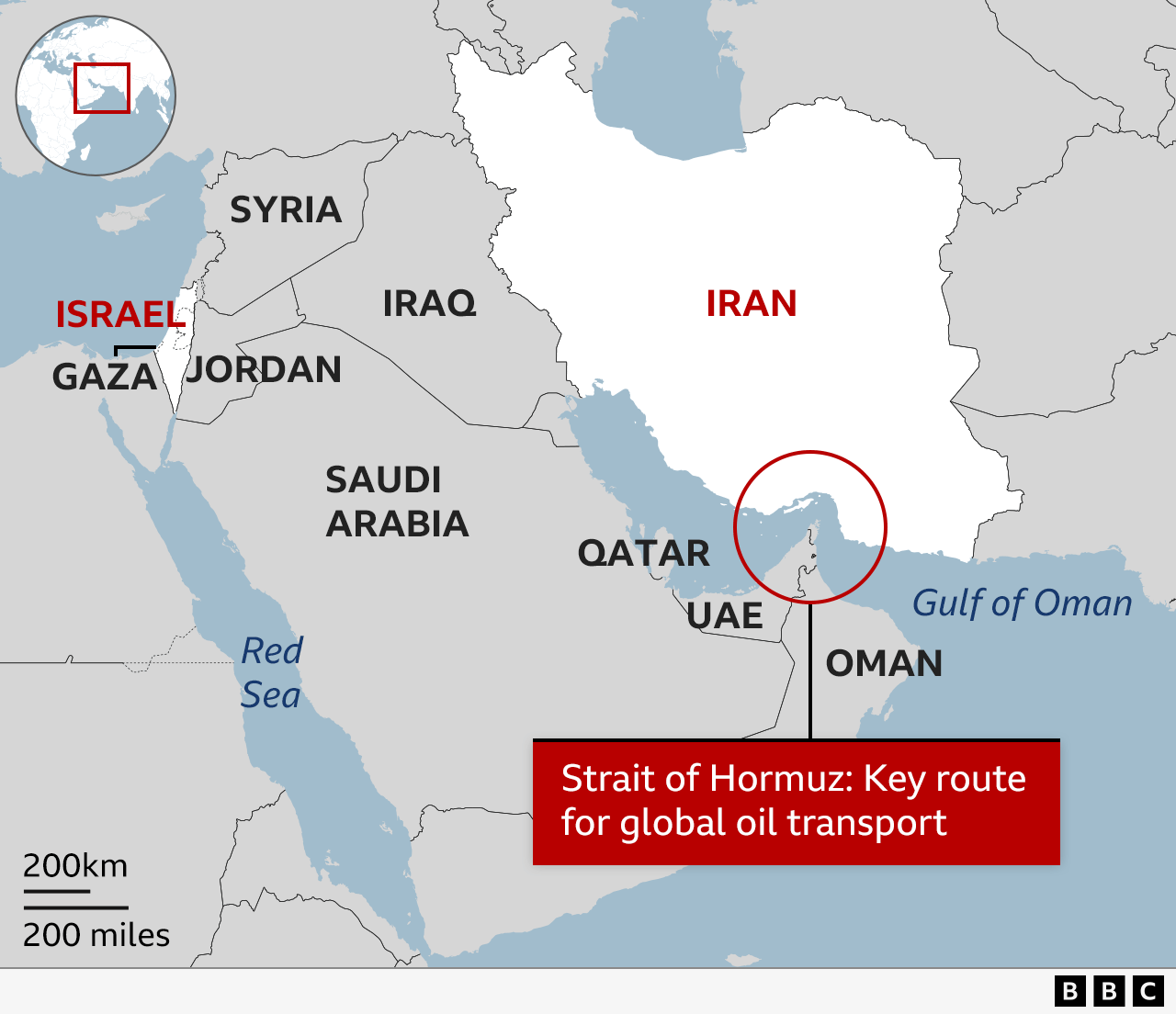
The fall in oil prices was driven by easing geopolitical tensions in the Middle East, particularly signs of increased tanker movement through the Strait of Hormuz and expectations that Iranian crude exports could return more aggressively to the global market following temporary sanctions relief.
Market participants interpreted these developments as reducing the risk of supply disruptions that had previously supported higher crude prices. Additionally, reports of increasing Middle Eastern oil supply and softening physical crude premiums further pressured prices.
For Nigeria, declining oil prices could pose challenges to foreign exchange inflows, fiscal revenues and external reserves if the trend persists. Investors are therefore likely to closely monitor developments in the energy market and their implications for the domestic economy.
Technical Analysis
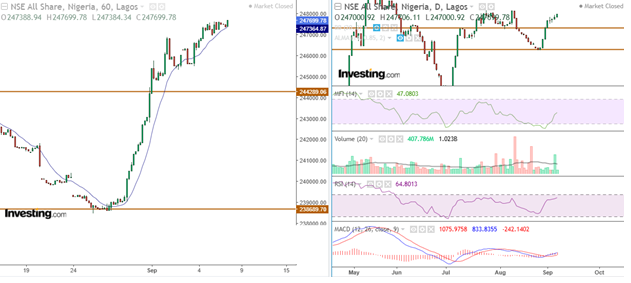
From a technical perspective, Wednesday’s sharp decline represents the first major correction after the market’s extended rally to historic highs. The 2.35% decline in the benchmark index confirms strong resistance around the 240,000-point region, where profit-taking emerged aggressively.
The market’s inability to sustain gains above this level indicates that many investors viewed the rally as an opportunity to secure profits. The correction has also reduced overbought conditions that had developed following the market’s prolonged advance.
However, it is important to note that the broader trend remains firmly bullish. The All-Share Index continues to trade above key moving averages, while the year-to-date gain of over 51% underscores the strength of the underlying market structure. The decline should therefore be viewed within the context of a healthy correction rather than a reversal of the prevailing uptrend.
The increase in selling pressure, particularly in highly capitalized stocks, suggests that short-term traders and institutional investors were actively involved in the market’s retracement. Nonetheless, the continued resilience of selected growth stocks and the absence of panic selling indicate that investor confidence remains largely intact.
Momentum indicators are expected to weaken in the near term, and further volatility cannot be ruled out as the market searches for a new equilibrium level. Support is likely to emerge around previous breakout zones, where bargain hunters may begin accumulating fundamentally strong stocks.
Outlook
Looking ahead, market participants are expected to focus on a combination of corporate earnings expectations, monetary policy developments, exchange-rate stability and crude oil market dynamics.
The approaching half-year earnings season is likely to become a major catalyst for market direction. Investors will be seeking confirmation that corporate profitability remains strong enough to justify current valuations, particularly among banking, telecommunications and industrial companies.
Banking stocks are expected to remain at the center of investor attention due to ongoing recapitalization activities and strong earnings momentum. Similarly, telecommunications stocks could continue attracting institutional interest given their defensive qualities and consistent cash-flow generation.
The current correction may also create opportunities for long-term investors seeking quality stocks at discounted prices. Historically, periods of profit-taking during bull markets often provide attractive entry points for investors willing to focus on fundamentals rather than short-term price fluctuations.
While additional profit-taking cannot be ruled out in the coming sessions, the combination of strong liquidity, improving economic conditions, robust corporate earnings expectations and sustained institutional participation suggests that the broader market outlook remains constructive.
At the close of trading, the NGX All-Share Index declined by 2.35% to 235,074.54 points from 240,743.19 points, while market capitalization lost N3.64 trillion, representing the largest single-day wealth erosion of 2026. Consequently, the market’s year-to-date return moderated to 51.06%. Total volume traded fell by 13.60% to 488.08 million shares valued at N20.93 billion in 46,239 deals. Market breadth closed negative at 17 gainers against 38 losers, reflecting broad-based selling pressure. FIRSTHOLDCO led volume turnover with 57.39 million shares, accounting for 11.76% of total volume traded, while GEREGU topped the value chart with N3.67 billion, representing 17.55% of total market value. CHAMS and ACCESSCORP contributed 8.67% and 7.39% of traded volume respectively, while FIRSTHOLDCO and MTNN followed GEREGU in value terms. Major market movers included BUACEMENT (-10.00%), DANGCEM (-10.00%), GEREGU (-10.00%), CUSTODIAN (-9.97%), TIP (-3.45%), OANDO (-3.00%), ZENITHBANK (-2.88%), WEMABANK (-2.76%), NB (-0.95%), DANGSUGAR (-0.91%) and UBA (-0.50%). SKYAVN led the gainers’ chart, closing at N171.20 above its previous 52-week high of N164.95, while BUACEMENT, DANGCEM and GEREGU topped the losers’ table.