
Quarter Under Preview: FIRST QUARTER ENEDE MARCH 30TH 2026
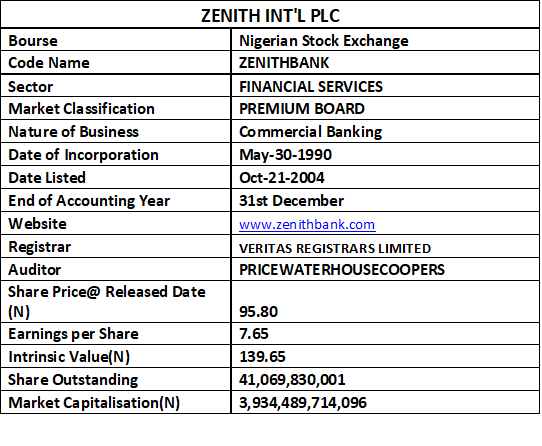
Current Share Price: N129:00
Price At Released: N95.80
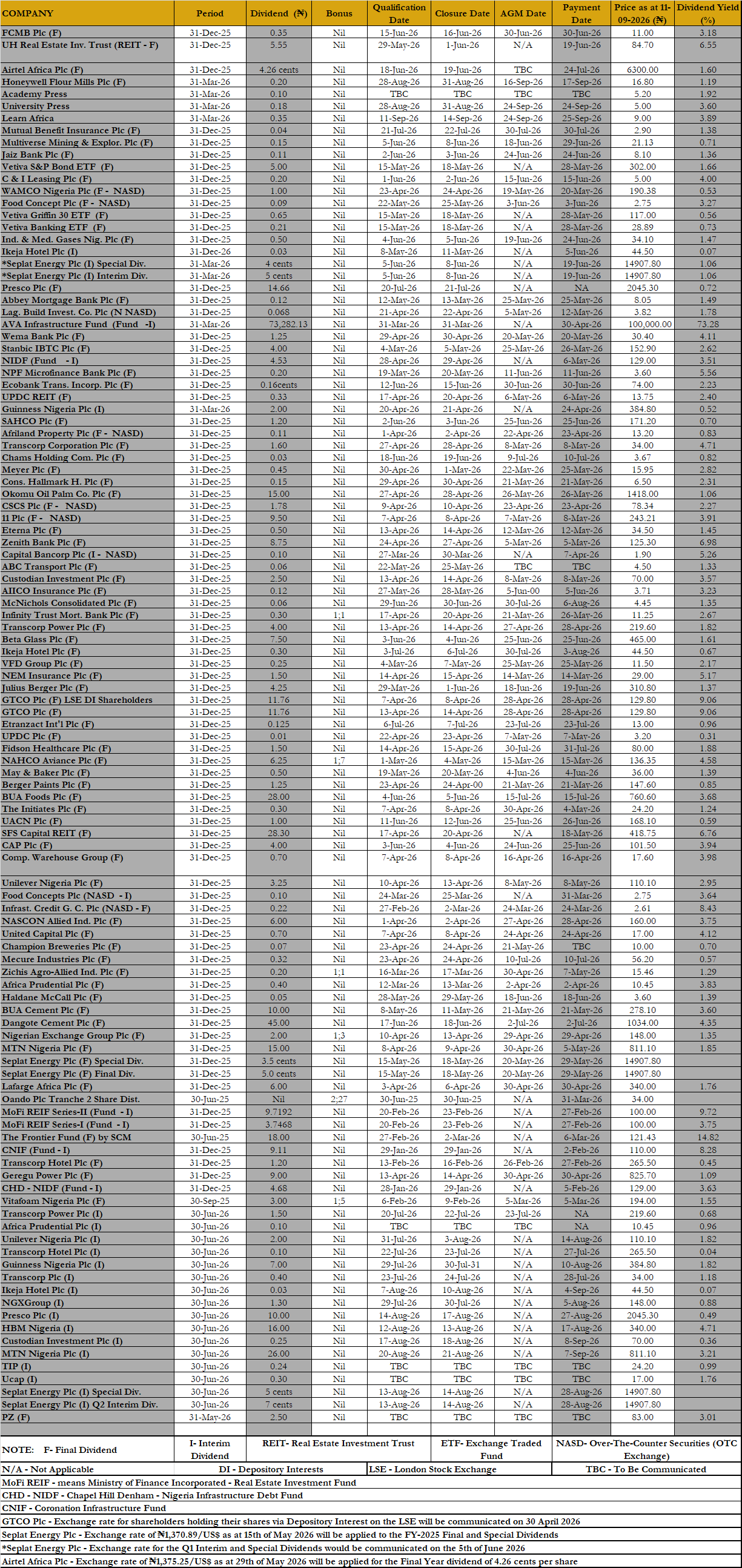
Latest Final Dividend: N8.75
Latest Interim Dividend: N1.25
Estimated Beta Value: 0.43x
Estimated Intrinsic Value: N139.65
Rating: Buy
Analyst: Jeariogbe Tunde Segun
The Company
Zenith Bank Plc was founded in 1990 by Jim Ovia and commenced operations in July of the same year as a commercial bank in Nigeria. The bank quickly distinguished itself in such areas as strong corporate governance, aggressive adoption of technology, and a focus on corporate banking services. Over the years, Zenith Bank expanded its operations beyond Nigeria into other African countries and international financial centres. In the process, it built a reputation as one of Nigeria’s most profitable and capitalized financial institutions.
In 2004, Zenith Bank became a public limited liability company and was subsequently listed on the then Nigerian Stock Exchange (now Nigerian Exchange Limited), following a very successful initial public offering (IPO). The bank later expanded into digital, retail and international banking services, strengthening its position in the African banking sector. Today, Zenith Bank is widely recognized for its financial strength, innovation, and consistent profitability, serving millions of customers through an extensive branch network and digital platforms across Nigeria and beyond.
Released Numbers
Zenith Bank Plc delivered a resilient first quarter 2026 performance, with gross earnings rising by 6.14% to ₦1.01 trillion from ₦949.86 billion in Q1 2025. The growth was largely driven by a 3.76% increase in interest income to ₦869.10 billion, while interest expenses declined by 4.64% to ₦235.02 billion. This combination significantly improved net interest income by 7.26% to ₦634.08 billion, indicating stronger earnings quality and improved funding efficiency despite the challenging interest rate environment.
However, operating costs expanded notably during the period, with operating expenses increasing by 14.53% to ₦302.92 billion. Depreciation and amortisation expenses also grew sharply by 22.98% and 14.26% respectively, reflecting the impact of inflationary pressures, technology investments, and expansion-related costs. Despite the higher cost profile, Zenith Bank maintained profitability momentum, with profit before tax increasing strongly by 15.91% to ₦360.92 billion, showing the bank’s ability to absorb rising expenses while sustaining earnings growth.
On the bottom line, profit after tax stood at ₦314.02 billion, representing only a marginal growth of 0.85% year-on-year, largely due to a 20.31% increase in tax expenses during the quarter. More notably, total comprehensive income declined sharply by 33.54% to ₦274.89 billion from ₦413.62 billion recorded in Q1 2025, suggesting significant unrealized losses or adverse movements in other comprehensive income components such as foreign currency translation reserves or fair value adjustments. Overall, the result reflects a fundamentally strong core banking performance, although pressure from rising costs and weaker comprehensive income moderated overall earnings quality.
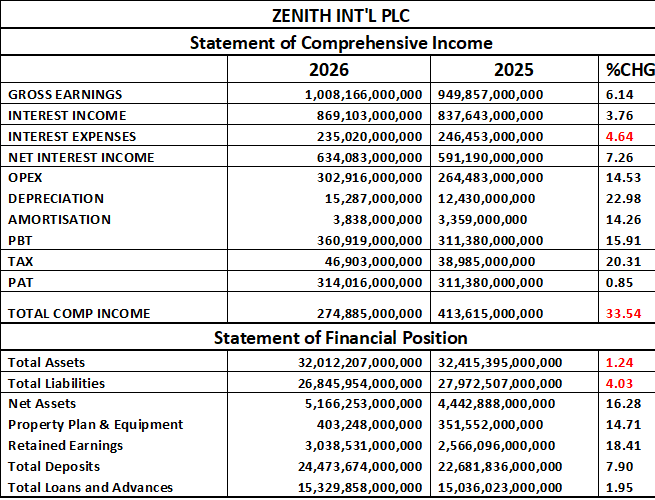
Zenith maintained a strong balance sheet position in the first quarter of 2026 despite a slight moderation in total assets. Total assets declined marginally by 1.24% to ₦32.01 trillion from ₦32.42 trillion in 2025, while total liabilities also reduced by 4.03% to ₦26.85 trillion. The faster decline in liabilities relative to assets strengthened shareholders’ funds, with net assets rising significantly by 16.28% to ₦5.17 trillion, reflecting improved capital accumulation and stronger balance sheet resilience.
The bank also recorded solid growth in core balance sheet drivers. Total deposits increased by 7.90% to ₦24.47 trillion, indicating sustained customer confidence and strong liquidity mobilization capability. Retained earnings rose sharply by 18.41% to ₦3.04 trillion, highlighting the bank’s continued earnings retention strategy and capacity for internal capital generation. In addition, property, plant and equipment expanded by 14.71%, suggesting continued investment in operational infrastructure, digital banking systems, and branch support assets.
On the lending side, total loans and advances grew modestly by 1.95% to ₦15.33 trillion, which reflects a relatively cautious credit expansion strategy amid prevailing macroeconomic uncertainties and regulatory pressures. The slower loan growth compared to deposit growth may indicate a deliberate liquidity preservation approach and tighter risk management posture. Overall, the statement of financial position portrays Zenith Bank as a well-capitalized and liquid institution with strong deposit franchise growth, improving equity base, and prudent balance sheet management.
Financial Strength/Solvency Ratios
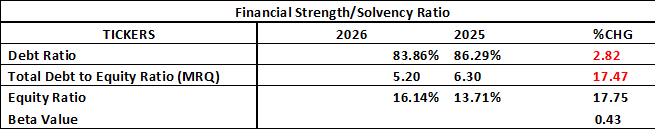
Zenith Bank’s performance showed notable improvement in its financial strength and solvency position during the first quarter of 2026, reflecting stronger capital support and a healthier balance sheet structure. The debt ratio declined from 86.29% in 2025 to 83.86% in 2026, indicating that a lower proportion of the bank’s assets are being financed through liabilities. This reduction, though moderate, signals improving financial stability and reduced balance sheet pressure.
The total debt-to-equity ratio also improved significantly from 6.30x to 5.20x, representing a 17.47% decline year-on-year. This suggests that shareholders’ equity is growing faster relative to liabilities, strengthening the bank’s capacity to absorb shocks and support future expansion. Correspondingly, the equity ratio rose from 13.71% to 16.14%, reflecting stronger capitalization and improved shareholders’ backing for the bank’s asset base. The improvement aligns with the earlier growth recorded in retained earnings and net assets.
In terms of market risk sensitivity, the Beta value of 0.43 indicates that Zenith Bank’s stock remains relatively less volatile compared to the broader market. A Beta below 1 generally suggests defensive characteristics, meaning the stock may experience lower price swings during periods of market uncertainty. Overall, the solvency ratios portray Zenith Bank as financially stable, adequately capitalized, and gradually reducing leverage risk while strengthening shareholder value.
Profitability Ratios
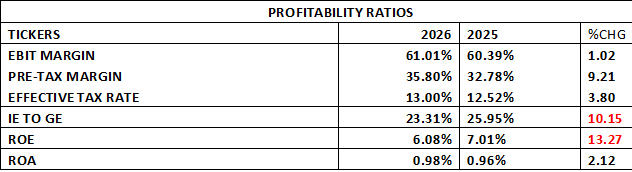
The giant financial institution maintained strong profitability metrics in the first quarter of 2026, supported by resilient earnings generation and improved operating efficiency. EBIT margin improved slightly from 60.39% in 2025 to 61.01% in 2026, indicating that it continues to retain a significant portion of its revenue after operating costs. Similarly, pre-tax margin rose strongly from 32.78% to 35.80%, reflecting enhanced profitability before taxation and showing that revenue growth outpaced the rise in operating expenses.
The bank’s effective tax rate increased moderately from 12.52% to 13.00%, consistent with the higher tax expense earlier observed in the income statement. Despite this, Zenith Bank achieved better operational cost management, as the interest expense-to-gross earnings ratio (IE to GE) declined from 25.95% to 23.31%. This improvement suggests more efficient funding structure management and stronger net interest spread performance, which contributed positively to overall earnings quality.
However, returns to shareholders weakened slightly during the period. Return on Equity (ROE) declined from 7.01% to 6.08%, indicating that the stronger growth in shareholders’ funds outpaced profit growth. This suggests the bank is becoming more capitalized, but profitability expansion has not fully matched the increase in equity base. Meanwhile, Return on Assets (ROA) improved marginally from 0.96% to 0.98%, showing that asset utilization remains stable and efficient. Overall, the profitability ratios reflect a fundamentally strong earnings profile, though shareholder return efficiency softened slightly due to expanding capital levels.
Efficiency Ratios
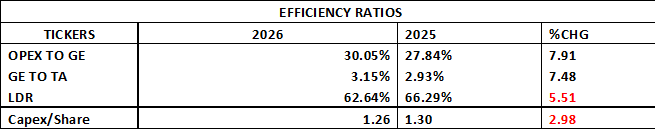
Zenith Bank recorded mixed efficiency indicators in the first quarter of 2026, reflecting stronger revenue generation alongside rising operating cost pressures. The OPEX-to-gross earnings ratio increased from 27.84% in 2025 to 30.05% in 2026, indicating that operating expenses consumed a larger portion of earnings during the period. This suggests the bank faced increased administrative, technology, and inflation-driven costs, which slightly weakened cost efficiency despite higher revenue growth.
On the positive side, the gross earnings-to-total assets ratio improved from 2.93% to 3.15%, showing enhanced asset utilization and stronger revenue generation capacity from the bank’s asset base. This indicates that Zenith Bank was able to derive more income from its assets compared to the previous year, reflecting improved operational productivity and effective deployment of earning assets in a high-interest-rate environment.
Meanwhile, the loan-to-deposit ratio (LDR) declined from 66.29% to 62.64%, suggesting a more conservative lending posture and stronger liquidity position. While the lower LDR may reduce credit risk exposure, it also indicates that deposit growth outpaced loan expansion, potentially limiting interest income growth opportunities. Capex per share also declined slightly from 1.30 to 1.26, reflecting either moderated capital spending intensity or improved capital allocation efficiency. Overall, the efficiency ratios show that Zenith Bank maintained strong revenue productivity, though rising operating costs remain an area requiring close management attention.
Investment/Valuation Ratios
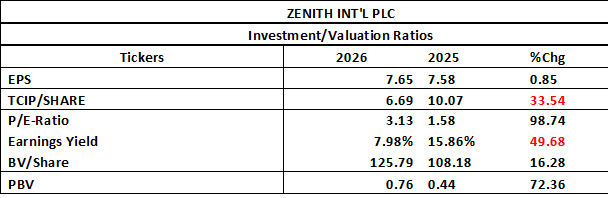
Zenith recorded mixed investment and valuation metrics in the first quarter of 2026, reflecting stronger balance sheet value but softer market return attractiveness. Earnings per share (EPS) improved marginally from 7.58 to 7.65, representing a 0.85% increase, which aligns with the relatively flat growth recorded in profit after tax. This indicates that despite strong operating performance, bottom-line growth available to shareholders remained modest during the period.
Total comprehensive income per share (TCIP/share) declined significantly from 10.07 to 6.69, reflecting the sharp drop earlier observed in total comprehensive income. This suggests that unrealized losses or adverse reserve movements negatively impacted shareholders’ comprehensive returns. However, the bank’s valuation metrics strengthened considerably, as the price-to-earnings (P/E) ratio rose sharply from 1.58x to 3.13x. The increase implies improved market pricing relative to earnings and may indicate stronger investor confidence or upward re-rating of the stock.
Earnings yield declined from 15.86% to 7.98%, largely due to the sharp increase in market valuation reflected in the higher P/E ratio. Meanwhile, Book Value per Share rose strongly by 16.28% to 125.79, reinforcing the growth in shareholders’ equity and intrinsic value of the bank. The price-to-book value (PBV) ratio also increased from 0.44x to 0.76x, suggesting improved market appreciation of the bank’s net asset base, although the stock still appears to trade below its book value. Overall, the valuation ratios indicate that Zenith Bank remains fundamentally strong with improving intrinsic value, while market sentiment toward the stock appears to be strengthening gradually.
Final Verdict, Recommendations, and Ratings
The bank delivered a fundamentally strong first quarter 2026 performance, supported by resilient core banking earnings, improving solvency ratios, stronger capitalization, and sustained deposit growth. The bank demonstrated effective balance sheet management as net interest income, pre-tax profit, retained earnings, and shareholders’ funds all recorded healthy growth. Asset utilization also improved, while leverage ratios moderated, reflecting a stronger financial position. These indicators confirm Zenith Bank’s continued status as one of the most financially stable and fundamentally resilient banks in Nigeria.
However, the result also revealed a few pressure points. Operating expenses increased significantly, compressing some efficiency metrics, while profit after tax growth remained relatively weak, despite strong PBT expansion due to the higher tax charges. More importantly, the sharp decline in total comprehensive income suggests adverse fair value, or foreign exchange reserve movements, which reduced the quality of overall earnings during the quarter. Return on equity also softened, indicating that capital growth is currently outpacing profit growth.
From an investment perspective, Zenith Bank still appears attractive for medium- to long-term investors due to its strong capital base, solid liquidity, consistent profitability, and improving intrinsic value. The stock still trades below book value despite the improvement in PBV ratio, suggesting potential upside valuation opportunity if earnings momentum strengthens further. In addition, the bank’s relatively low beta value indicates lower market volatility risk compared to many equities on the market.
Investment Recommendation
- Long-term Investors: BUY
- Existing Shareholders: HOLD and ACCUMULATE on weakness
- Short-term Traders: MODERATE BUY, but monitor market sentiment and comprehensive income trends closely.
- General Rating: BUY. The bank still shows strong fundamentals driven by; strong profitability at the core business level, improving capital and solvency positions, strong deposit growth and liquidity, solid intrinsic/book value growth, and relatively attractive valuation despite recent market appreciation. Nevertheless, it should be noted that, the major concerns remains, rising operating costs, weak growth in PAT relative to PBT, and sharp decline in total comprehensive income.