
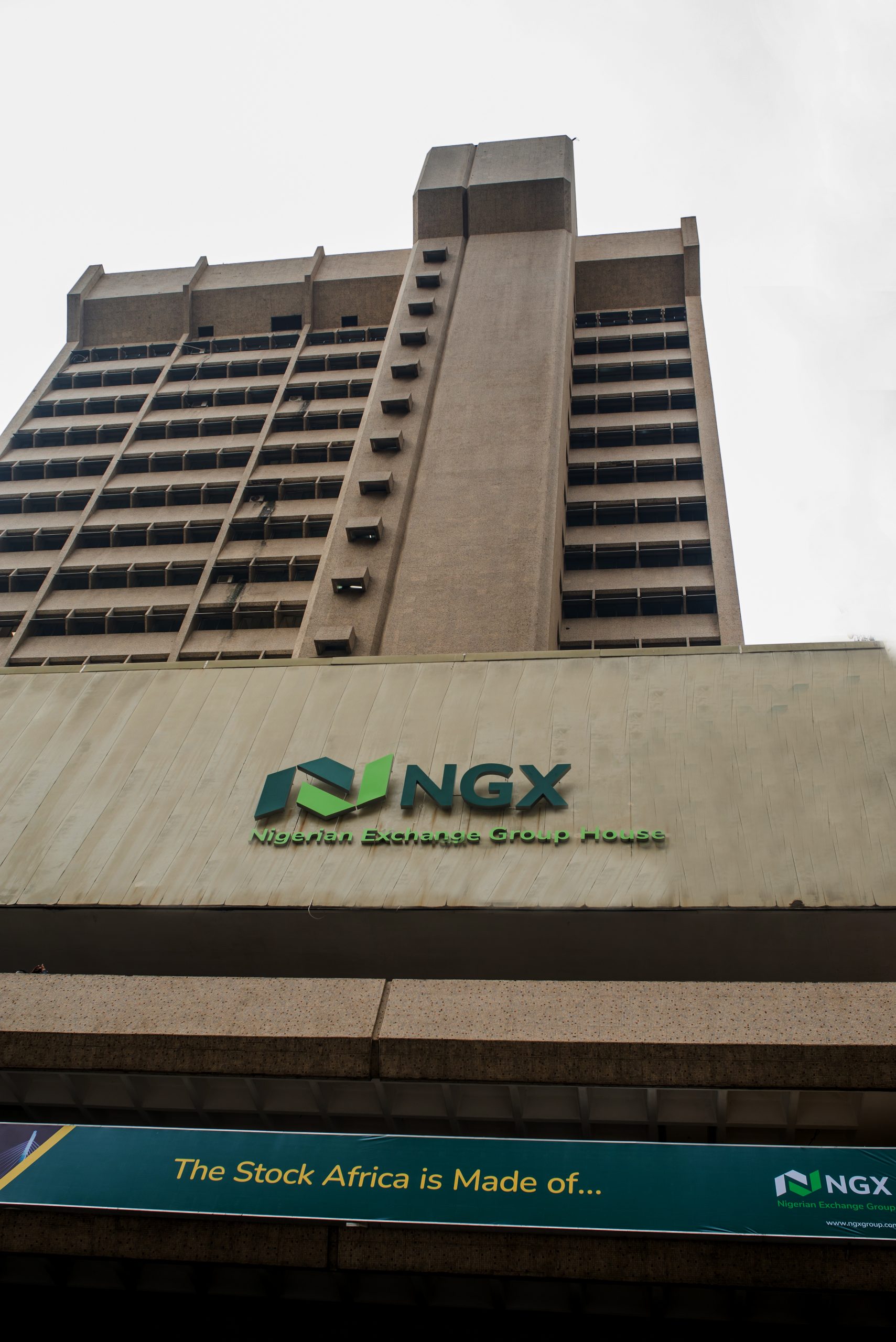
Market Update For October 19, 2026
The Nigerian equities market extended its bearish run on Monday, October 19, 2026, as renewed selling pressure across heavyweight stocks dragged the NGX All-Share Index (ASI) lower, wiping ₦1.47 trillion off the market’s total capitalisation. The downturn reflected cautious investor sentiment, with losses across banking, industrial and consumer-related stocks outweighing gains in selected counters.
The market’s performance suggested that investors remained focused on protecting recent gains following the substantial appreciation recorded earlier in the year. Despite the decline, the equities market maintained a strong year-to-date return, although the latest sell-off highlighted the growing risk of further profit-taking if buying interest fails to recover.
The decline in the ASI also reflected the influence of large-capitalisation stocks on the market’s overall direction. Banking stocks, which remain significant contributors to trading activity and market value, came under pressure alongside industrial and consumer stocks. The losses in these sectors reinforced the negative sentiment and limited the market’s ability to recover during the session.
Among the notable decliners were DANGCEM, ETI, CUSTODIAN, WEMABANK, UBA, ACCESSCORP, ZENITHBANK, GTCO and FIDELITYBK. Other stocks that closed lower included NGXGROUP, ETERNA, TIP, OANDO, UACN, FIRSTHOLDCO and DANGSUGAR.
The performance of these stocks highlighted the broad reach of the selling pressure, particularly among companies that attract considerable investor attention because of their market size, liquidity and importance to the domestic investment landscape.
However, the session was not entirely negative, as selected stocks continued to attract buying interest. The gains recorded by some counters suggested that investors were still identifying opportunities in individual stocks despite the broader market downturn. Nevertheless, the advances were insufficient to offset the losses recorded across the wider market.
Profit-taking remained a key factor influencing market direction, as investors reassessed their exposure following the strong appreciation recorded in the Nigerian equities market during the year.
The market’s year-to-date return of 57.62% at the close of Monday’s session reflected the substantial gains accumulated by investors since the beginning of 2026. However, strong prior returns can also encourage portfolio rebalancing as investors seek to secure profits, particularly when valuations rise or uncertainty increases.
The latest decline may therefore reflect a combination of profit-taking, cautious positioning and selective selling in stocks that have attracted significant buying interest in previous sessions. However, the available market data do not establish the precise contribution of each factor to Monday’s performance.
Investor sentiment may also be influenced by expectations surrounding corporate earnings, dividend announcements, interest rates, inflation and the broader economic outlook. These factors remain important in determining the attractiveness of equities relative to fixed-income securities and other investment options.
For investors with a medium- to long-term outlook, the market’s correction could create opportunities to reassess portfolio allocations and identify fundamentally sound companies trading at more attractive prices. However, a lower share price alone does not necessarily indicate undervaluation, making it important to consider earnings prospects, balance-sheet strength, cash flow and corporate governance.
The ability of the market to stabilise will depend partly on whether investors begin to accumulate stocks at prevailing prices or continue to reduce their exposure to equities. A recovery in large-capitalisation stocks would be particularly important in supporting a broader market rebound.
Market breadth remained negative on Monday, with 17 stocks advancing against 40 decliners, while 89 stocks closed unchanged. The imbalance indicated that declining stocks outnumbered advancing counters by a considerable margin, reinforcing the bearish tone of the session.
Negative breadth is an important indicator of underlying market participation because it helps show whether a market decline is concentrated in a few large stocks or reflects weakness across a broader range of listed companies.
In Monday’s session, the higher number of declining stocks suggested that selling pressure extended beyond isolated counters. Although some stocks recorded strong gains, the overall distribution of market performance indicated that demand was insufficient to support a broad-based recovery.
The number of unchanged stocks also showed that a substantial portion of the market did not record a price movement during the session. This may reflect differences in trading activity, investor interest and liquidity across listed stocks.
For the market to regain positive momentum, an improvement in breadth would be important. A sustained increase in advancing stocks, particularly alongside gains in liquid and large-capitalisation counters, would provide stronger evidence of improving sentiment than an isolated rise in the ASI.
Conversely, continued negative breadth could indicate that the market remains vulnerable to further declines, even if selected stocks continue to record gains.
Investors should therefore monitor both the direction of the ASI and the number of advancing and declining stocks when assessing the market’s near-term outlook.
Banking stocks featured prominently among Monday’s decliners, with UBA, ACCESSCORP, ZENITHBANK, GTCO, FIDELITYBK, WEMABANK and FIRSTHOLDCO closing lower.
The performance of these stocks was significant because banking counters are widely followed by investors seeking exposure to financial-sector earnings, dividend income and the broader Nigerian economy. Their market liquidity also makes them important components of daily trading activity.
However, the decline in banking stocks should not automatically be interpreted as evidence of deteriorating fundamentals across the sector. Daily price movements can reflect profit-taking, changes in investor positioning and short-term market sentiment, while the longer-term outlook depends on earnings performance, asset quality, capital adequacy, funding costs and the prevailing interest-rate environment.
Industrial stocks also faced selling pressure, with DANGCEM recording a 5.50% decline. Losses in the cement producer and other industrial counters contributed to the market’s weakness, reinforcing the impact of selling across sectors.
Consumer-related stocks were similarly affected, with VITAFOAM and DANGSUGAR among the decliners. The performance of consumer companies remains important to investors assessing household purchasing power, production costs, pricing flexibility and the impact of inflation on demand.
The simultaneous weakness across banking, industrial and consumer stocks underscored the importance of sector diversification when constructing an equities portfolio. Although diversification cannot eliminate market risk, exposure to companies with different earnings drivers can help reduce dependence on the performance of a single sector.
Trading activity was reported to have weakened during Monday’s session, although the supplied market reports contained conflicting turnover figures that require reconciliation before publication.
One set of figures showed total traded volume declining by 10.10% to 257.73 million shares, valued at ₦13.07 billion across 32,032 deals. A separate market summary reported turnover of 349.34 million shares worth ₦17.99 billion in 43,115 deals.
The discrepancy means that the official NGX trading statistics should be confirmed before either set of figures is treated as the definitive measure of market activity.
The reports identified UBA and ACCESSCORP among the actively traded stocks by volume, while ZENITHBANK and ARADEL featured prominently in traded value. This highlighted the continued importance of financial-sector stocks and selected large-capitalisation counters to overall market activity.
Trading volume and value provide useful information about investor participation, but they should be interpreted alongside price movements and market breadth. Rising turnover during a market decline, for example, may reflect increased selling activity, while falling turnover could indicate reduced participation or a temporary pause in trading interest.
Neither pattern, in isolation, establishes the direction of future prices. Investors need to assess whether subsequent sessions show stronger demand, persistent selling or a stabilisation in prices.
A sustained recovery supported by improving breadth and stronger turnover would provide more convincing evidence of renewed investor confidence. In contrast, continued price declines accompanied by widespread losses would suggest that the market remains under pressure.
Technical Analysis and Market Outlook
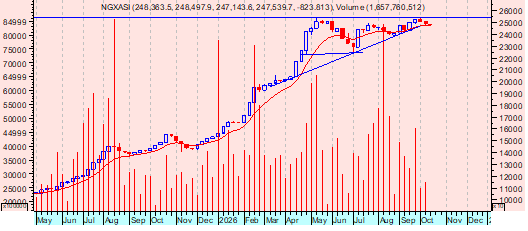
The NGX All-Share Index closed at 245,278.34 points, down 2,261.39 points from the previous session’s 247,539.73 points. The 0.91% decline placed the index close to the psychological 245,000-point level, which investors may monitor as an immediate area of potential support.
From a technical perspective, the latest decline indicates that sellers maintained the upper hand during the session. The negative market breadth provides additional evidence of weak underlying momentum, as declining stocks substantially outnumbered advancing counters.
The 245,000-point area represents a level to watch rather than a confirmed technical support zone. A sustained break below it could expose the index to further weakness if selling pressure persists. However, the extent of any subsequent decline would depend on price action, investor demand and the performance of heavyweight stocks.
On the upside, the previous closing level of 247,539.73 points represents an immediate reference point for assessing a potential recovery. A move back above that level, supported by stronger buying interest and improving market breadth, could suggest that selling pressure is beginning to ease.
A brief rebound, however, would not necessarily establish a bullish reversal. Confirmation would require sustained upward movement and broader participation across the market.
The near-term outlook therefore remains cautious. Investors are likely to monitor whether the market can maintain its position around the 245,000-point area or whether continued selling pushes the ASI lower.
The performance of banking and industrial stocks will be particularly important because of their influence on market capitalisation and the overall index. Renewed demand in these counters could help stabilise the market, while continued declines could prolong the bearish trend.
For investors, the current environment calls for careful stock selection rather than indiscriminate buying during a market correction. Companies with resilient earnings, manageable debt, consistent cash generation and attractive valuations may offer opportunities, but investment decisions should be based on their fundamentals rather than price declines alone.
Investors should also consider their investment horizon, liquidity needs and tolerance for market volatility before making portfolio adjustments. Short-term traders may remain focused on price momentum and technical levels, while long-term investors may place greater emphasis on earnings growth, dividend sustainability and valuation.
Overall, the market’s strong year-to-date performance provides some context for the current profit-taking, but it does not rule out further weakness. The direction of subsequent sessions will depend on the balance between investors seeking to lock in gains and those willing to accumulate stocks at prevailing prices.
Oil Market
In the international commodities market, oil prices retreated on Monday as investors booked profits following the multi-month highs recorded at the end of the previous week.
Brent crude futures fell by $1.45, or 1.32%, to $108.41 per barrel by 11:52 GMT, after settling at their highest level since May 19 on Friday. US West Texas Intermediate crude declined by 32 cents, or 0.32%, to $101.09 per barrel, after ending the previous week at its highest level since September 17.
The decline reflected profit-taking after the recent price rally, although concerns over global supply continued to support the market. Conflicts in the Middle East and Ukraine remained important sources of uncertainty, particularly because of their potential to disrupt crude production, transportation and international trade flows.
Disruptions affecting vessels transiting the Strait of Hormuz and oil flows remaining below pre-conflict levels continued to raise concerns about supply availability. These developments kept geopolitical risks firmly in focus, even as traders took advantage of elevated prices to realise profits.
For Nigeria, developments in the global oil market have important implications for export earnings, foreign-exchange inflows and government revenue. Higher crude prices can improve potential earnings from oil exports, but the benefits depend on domestic production, export volumes, production costs and the government’s fiscal arrangements.
Oil-price volatility also creates uncertainty for economic planning. Although rising prices may support revenue, they can increase domestic energy costs and contribute to inflationary pressure, depending on how international price movements are transmitted to the local economy.
The outlook for crude oil will therefore remain relevant to investors assessing Nigeria’s macroeconomic environment, particularly its implications for foreign-exchange availability, fiscal performance and inflation.
Market Summary
At the close of trading on Monday, October 19, 2026, the NGX All-Share Index declined by 0.91%, or 2,261.39 points, to 245,278.34 points, while market capitalisation fell by ₦1.47 trillion to ₦159.26 trillion, reducing the year-to-date return to 57.62%. Market breadth remained negative, with 17 stocks advancing, 40 declining and 89 unchanged, as selling pressure across banking, industrial and consumer stocks weighed on overall performance. Major market movers on the downside included DANGCEM (-5.50%), ETI (-4.76%), CUSTODIAN (-4.43%), WEMABANK (-3.55%), TIP (-3.09%), NGXGROUP (-2.94%), ETERNA (-2.87%), UBA (-2.33%), ACCESSCORP (-1.93%), OANDO (-1.72%), UACN (-1.63%), ZENITHBANK (-1.59%), GTCO (-1.44%), FIDELITYBK (-1.19%), FIRSTHOLDCO (-0.51%) and DANGSUGAR (-0.37%). Trading activity figures require verification because the supplied reports contain conflicting volume, value and deal counts. MULTITREX (+10.00% to ₦0.66), CMFC (+9.97% to ₦3.64), AUSTINLAZ (+9.93% to ₦3.21), THOMASWY (+9.92% to ₦2.66) and NEIMETH (+5.88% to ₦8.10) led the gainers, while VITAFOAM (-10.00% to ₦174.60), CUTIX (-9.79% to ₦2.12), OMATEK (-9.38% to ₦1.45), INTENEGINS (-6.48% to ₦2.02) and LINKASSURE (-6.29% to ₦1.64) topped the losers.