
Nigeria’s All-Share Performance for 26th May, 2026
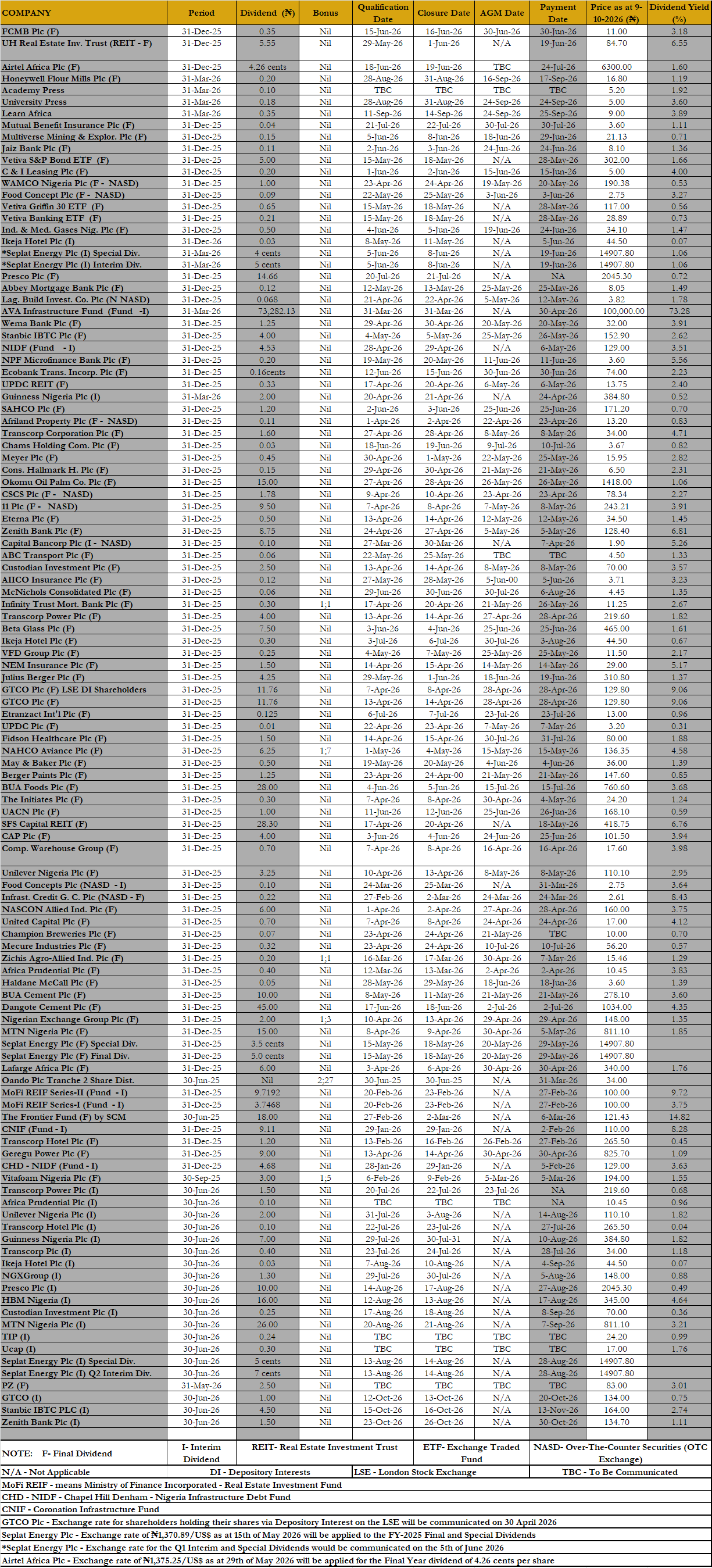
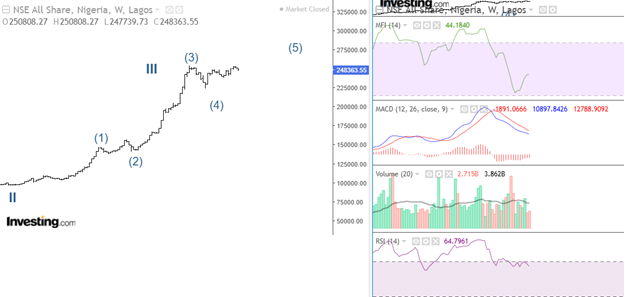
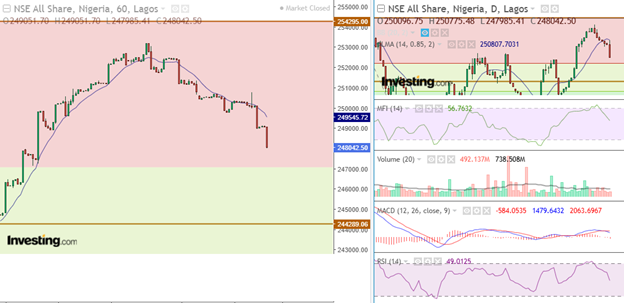
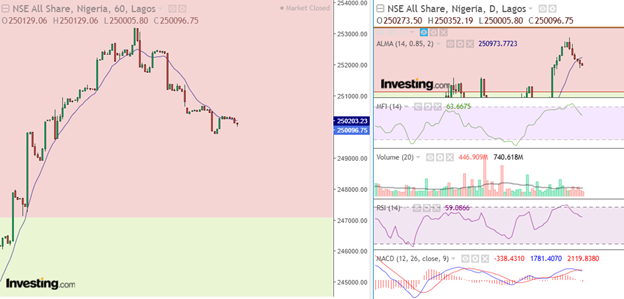
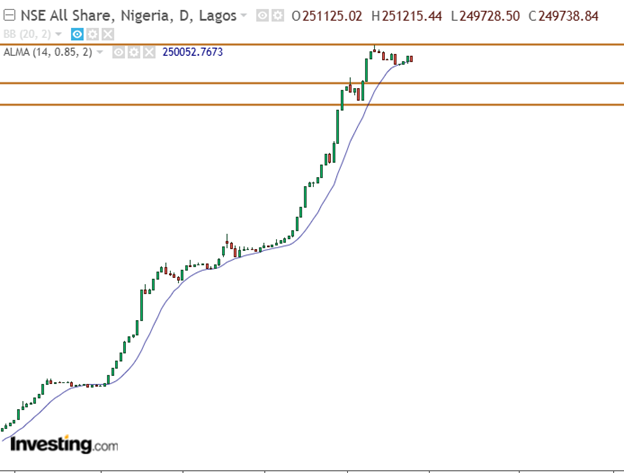
The Nigerian bourse’s All-Share Index (NGXASI) closed with a bearish sentiment on Tuesday, after losing 0.55% at 249,738.84 basis points, the index slightly crossed its moving average downwards. This loss was due to the strong bearish sentiment from the sectoral indices, which this report will attempt to explore.
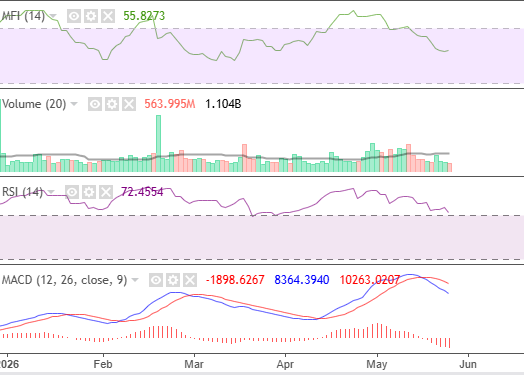
Following the bearish sentiment from the intraday market, the NGXASI indicators slowly declined before closing for the two-day holiday declared by the Federal Government to enable Muslims celebrate the Islamic festival of Eid-al-Adha on Wednesday and Thursday, May 27 and 28, 20226. Although market volume and momentum declined, liquidity remained solid, a pointer to the sustained investor confidence.
Key Sectoral Index Performance
NGXBNK: Banking Sector Index
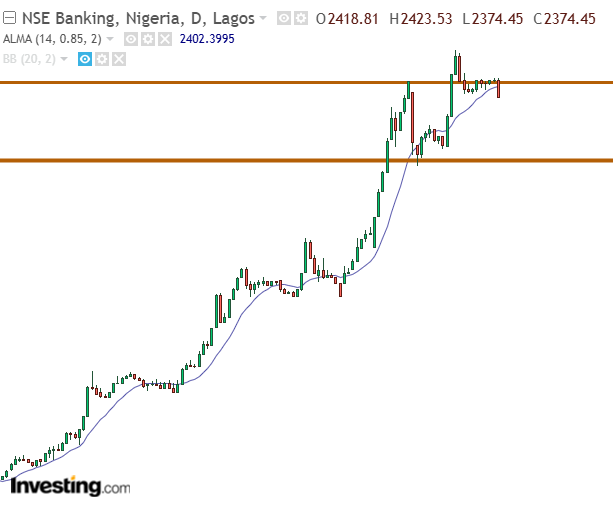
After attempting to break its resistance level of 2,413.91bps, the banking sector index lost 1.83%, closing at 2,374.45 bps, but the index continues in the distribution phase as profit-taking moves the index below its moving average. Notable contributors included FIDELITY (-9.05%), FIRSTHOLD (-3.50%), GTCO (-3.01%), FCMB (-1.67%), and ACCESSCORP (-1.60%).
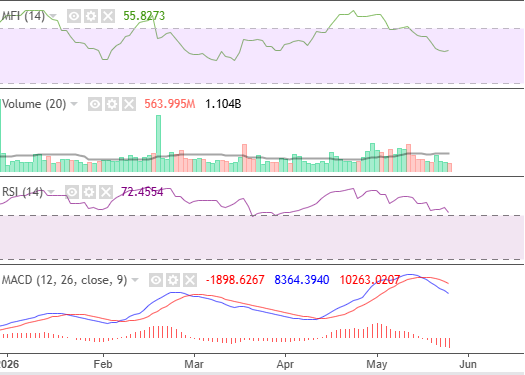
Although the bearish volume was low, the index lost momentum as RSI made a lower low. MACD’s bearish signal strengthened its momentum, while market liquidity remained moderately low. These actions indicate that the market bears are dominating the sector.
NGXCSMG: Consumer Goods Sector Index
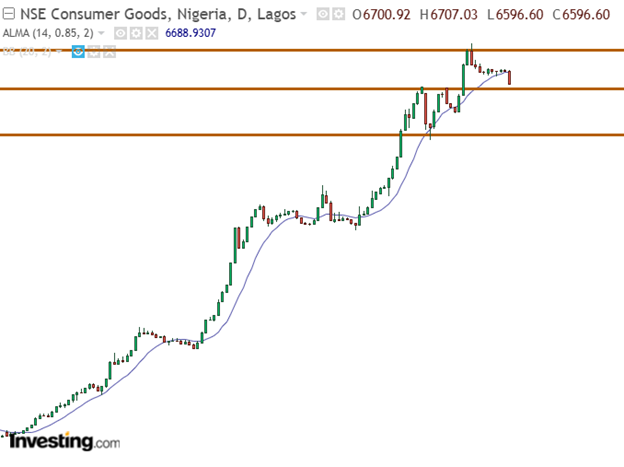
On the daily chart, the consumer goods index traded below its moving average after shedding 1.56%. The sector has shown resiliency above its moving average. That notwithstanding however, if we factor in selective bargain hunting the sector was bound to strongly pull back. Coupled with blue-chip banking companies, notable contributors included DANGSUGAR (-10%), FIDELITY (-9.05%), WAPIC (-8.18%), REDSTAR (-8.11%), and NEIMETH (-7.59%)
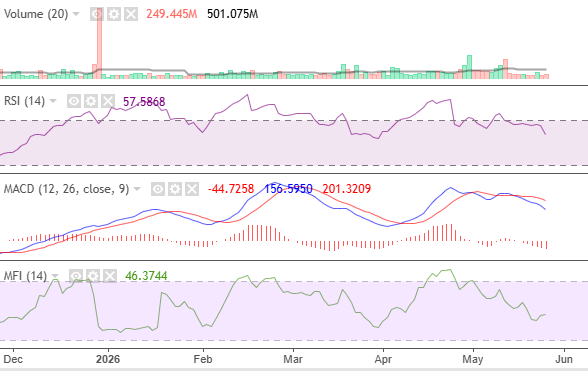
The indicators on the NGXCSMG’s daily chart closed with a unified sentiment. Market liquidity and volume remained moderately low. In line with this performance, MACD’s bearish momentum strengthened, which influenced RSI’s momentum decline.
NGXIND: Industrial Sector Index
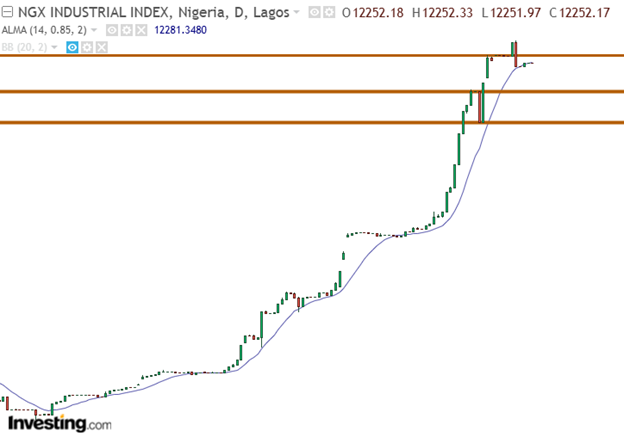
The index closed with an indecisive bearish candlestick. In other words, the industrial sector did not record any significant changes in basis points, even as it closed below its moving average. While the market remains strongly bearish, this sector’s performance continues to reflect investor confidence.
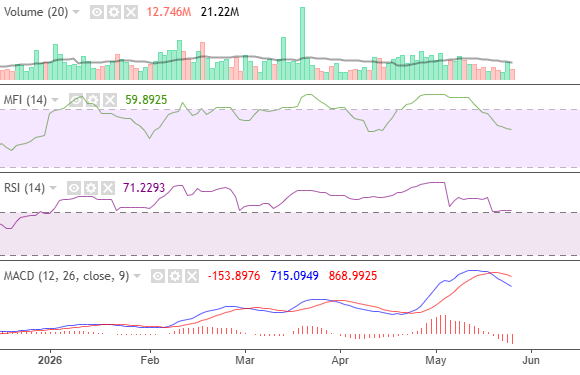
Given this performance, MACD’s bearish signal gained momentum, aligning with the market’s bearish volume. Regardless, the market liquidity and momentum remained solid and resilient.
NGXOGSE: Oil and Gas Sector Index
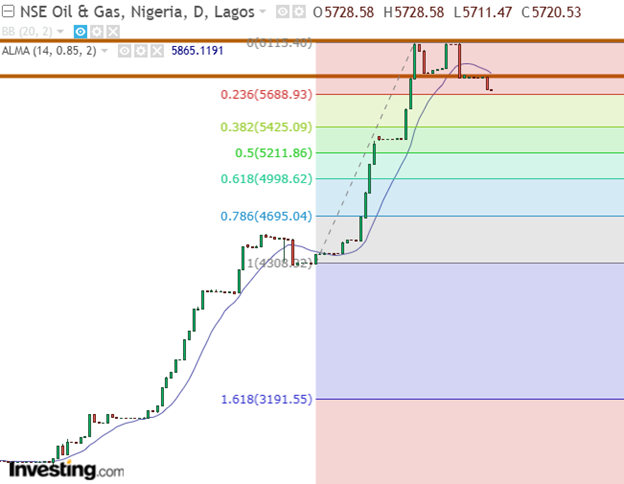
The oil index lost 0.14%, closing at 5,720.53 below its moving average, s reflection of the continuous bearish sentiment in the sector. If the bearish market remains aggressive, the expected support level should be at 5,425.09 bps.
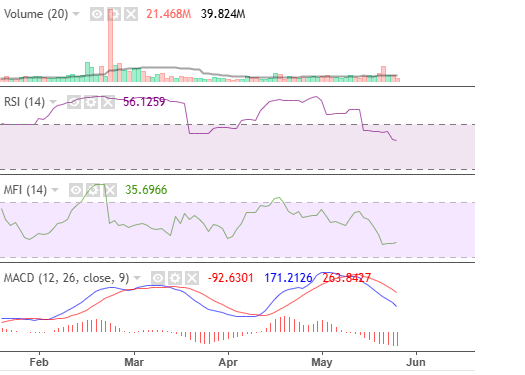
The indicators for the NGXOGSE align with the bearish sentiment. Market liquidity and volume remain low as RSI’s momentum weakens. Also, MACD’s bearish signal gained momentum, indicating continuous bearish sentiment.
NGXINS: Insurance Sector Index
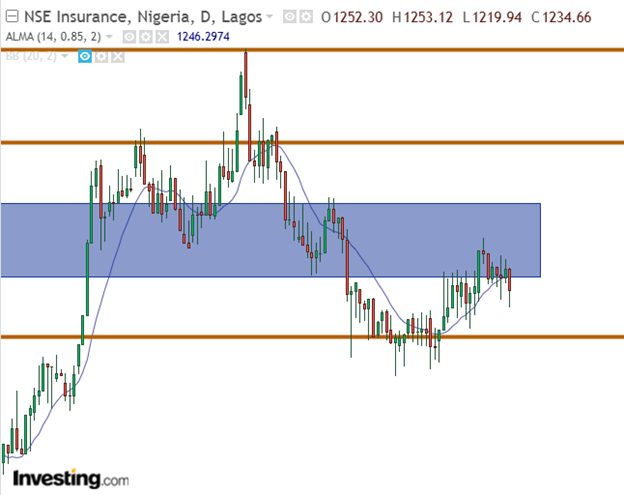
The insurance index lost 1.41%, closing at 1,234.66 bps. Given this performance, the index broke its support level (1,246.24 bps), closing below its moving average. Notable contributors included WAPIC (-8.18%), SUNUASSUR (-6.38%), MBENEFIT (-5.89%), LINKASS (-5%), and VERITASKAP (-2.94%)
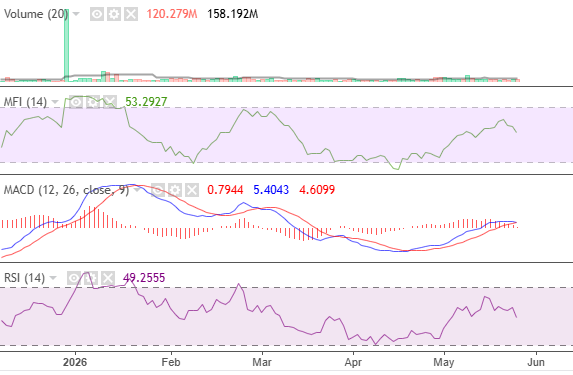
Despite the strong bearish sentiment, the market liquidity remained solid. On the other hand, RSI and MACD indicated divergence which means a potential trend reversal is on the horizon. The sector indulged in massive profit-taking which impacted these indicators’ performance. Thus, further action is required to determine the trajectory of this decline.
Final Thought
The overall market is strongly bearish as selective bargain hunting prevails. The banking, oil, and consumer goods sectors commenced their markdown phases. The industrial sector sustained its strength, though it remains indecisive below its moving average.