
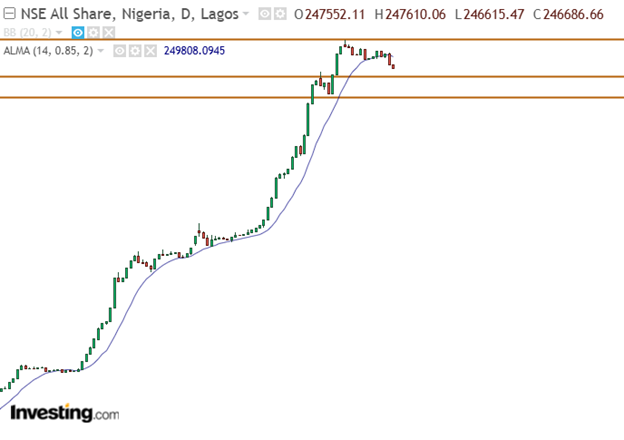
Nigeria’s All-Share Daily Performance for June 2, 2026
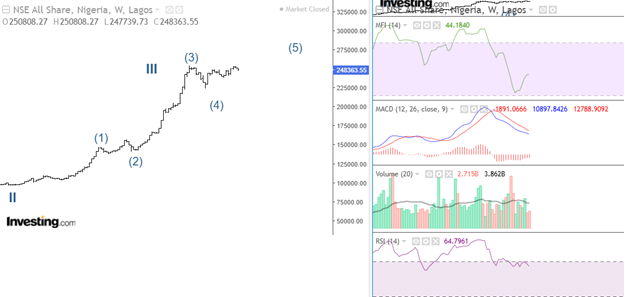
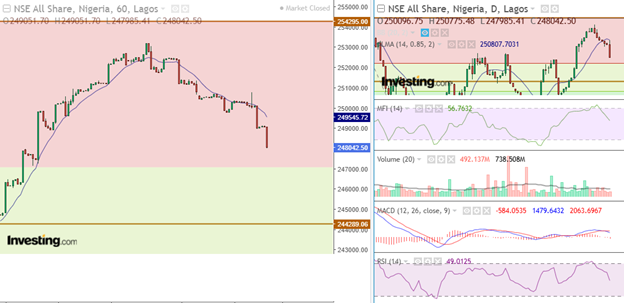
The Nigerian bourse lost 0.36%, closing at 246,686.66 basis points on Tuesday dragging its composite All-Share index closer to its support level at 244,289.06 basis points, while year-to-date return dropped to 58.53% from 59.09%. This is a signal that the index recorded more losers than winners. This report will, therefore, explore each sector’s performance for investment opportunities.
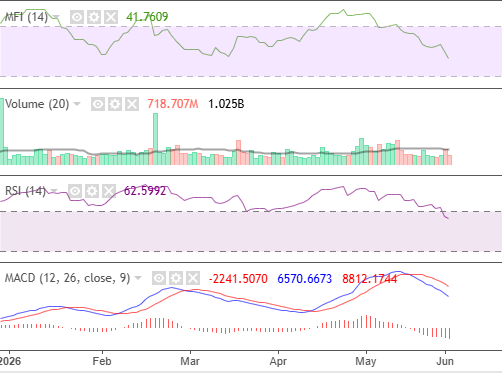
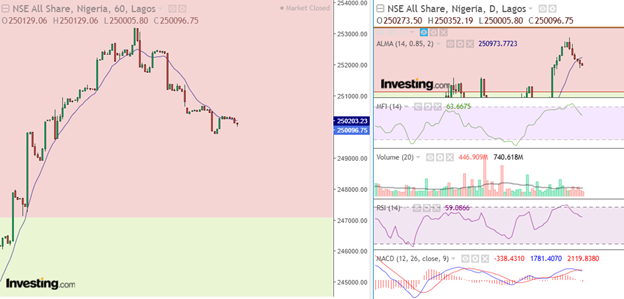
The indicators on the daily chart sustained their declining momentum. The market closed with lower liquidity, momentum, and volume. This performance pointer to a weak market. Are there any opportunities in the key sectoral index?
Key Sectoral Index Performance
NGXBNK: Banking Sector Index
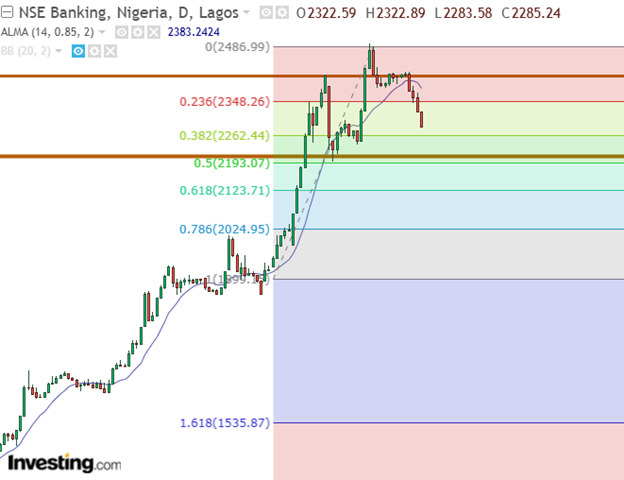
The banking sector strengthened its markdown after losing 1.63%. Closing at 2,285.24 bps, the index is near its potential support level at 2,262.44 bps by 1%. Thus, another distribution phase is on the horizon. Notable contributors included WEMABANK (-9.09%), FIRSTHOLD (-6.72%), ZENITH (-2.25%), and FCMB (-2.17%).
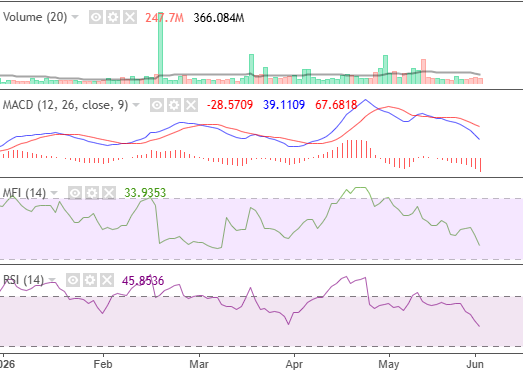
The banking index revealed that the market is weak. The bearish volume remained low due to low market liquidity and momentum. Additionally, MACD’s bearish signal gained momentum. This performance called for profit-taking and position holding in fundamentally sound stocks.
NGXCSMG: Consumer Goods Sector Index
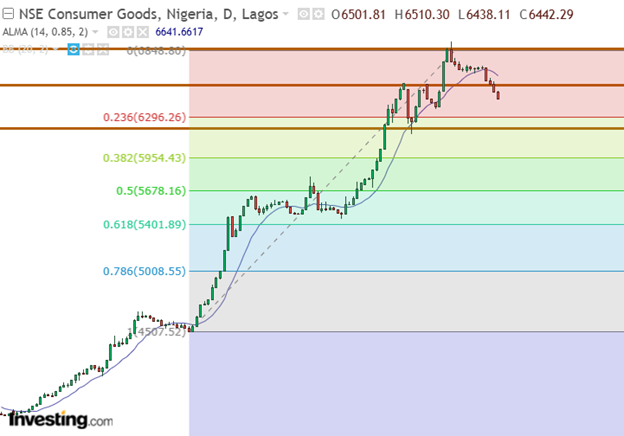
On the daily chart, the consumer goods index lost 0.94% amid selective bargain hunting. Since May, the investors have been investing in undervalued companies with good fundamentals in this sector. Closing at 6,442.29 bps, the index is expected to be supported at 6,296.26 bps, according to the Fibonacci retracement. Notable contributors included blue-chip banks, PZ (-10%), WEMABANK (-9.09%), ROYALEX (-6.67%), and UCAP (-4.74%)
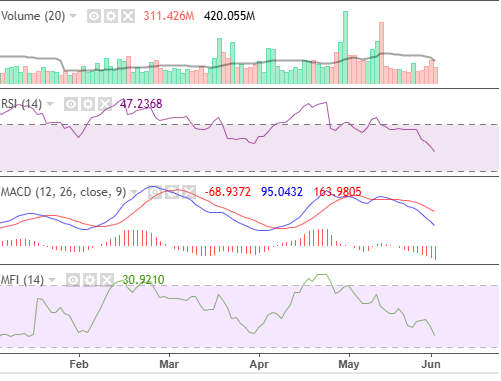
The indicators on the NGXCSMG daily chart signalled strong bearish sentiment which strengthened its markdown phase. In line with this performance, market liquidity and momentum weakened, as MACD’s bearish signal remained solid.
NGXIND: Industrial Sector Index
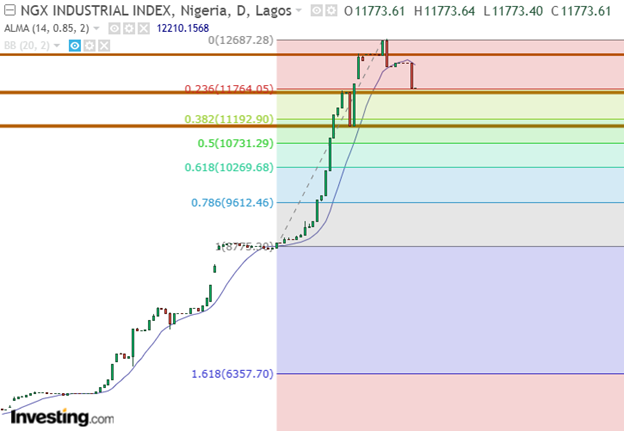
The industrial sector conformed to the 0.236 Fibonacci sequence as a potential support level. However, the index closed with a bullish indecisive candlestick at 11,773.61 bps. This performance indicated that investors bought into value amid a bearish market.
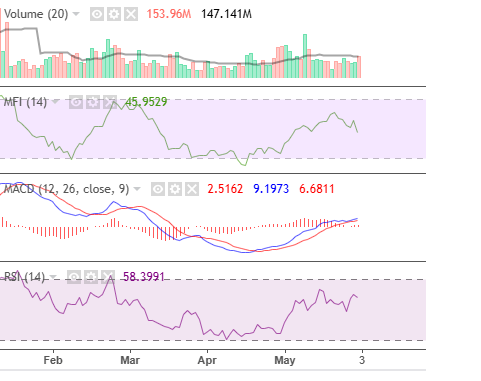
Although the bullish volume was strong on the daily timeframe, the market liquidity dropped. This performance aligns with the buying-into-value sentiment amid a bearish market. Also, RSI’s momentum remained solid, while MACD’s bearish momentum strengthened, indicating a continuous bearish sentiment.
NGXOGSE: Oil and Gas Sector Index
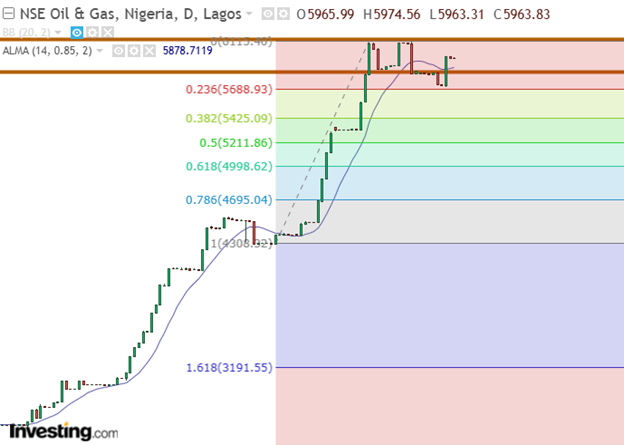
The oil index lost 0.04%, closing at 5,963.83 bps below its moving average. This index action reflects continuous distribution after a strong bullish sentiment. A notable contributor included ETERNAO (-4.21%).
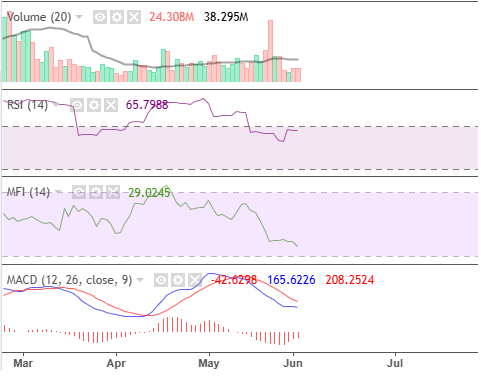
The indicators on the oil index daily chart closed with a mixed sentiment. The bearish volume remained low, following the market’s low liquidity. Also, RSI remained solid as the index closed above its moving average. Additionally, MACD’s bearish momentum signals divergence. Combining these readings, it’s evident that short-term traders briefly dominated the market as the sector recovered.
NGXINS: Insurance Sector Index
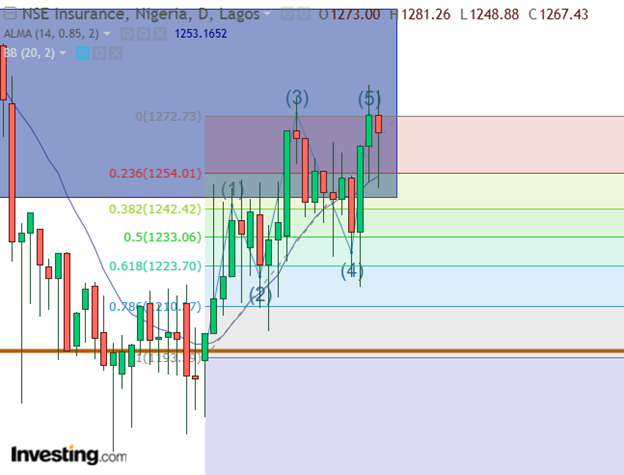
The insurance sector lost 0.44%, closing at 1,267.43 bps. This performance indicated that profit-taking prevailed as the index closed above its moving average. Notable contributors included SOVRENI (-8.16%), LASACO (-5.77%), CONHALLPLC (-1.16%), LINKASS (-1.12%), and VERITASKAP (-0.60%).
Using the Elliot wave, the insurance sector should complete its first wave in the intermediate degree. Thus, the index is expected to pull back to 0.382 or 0.5 of the Fibonacci retracement sequence.
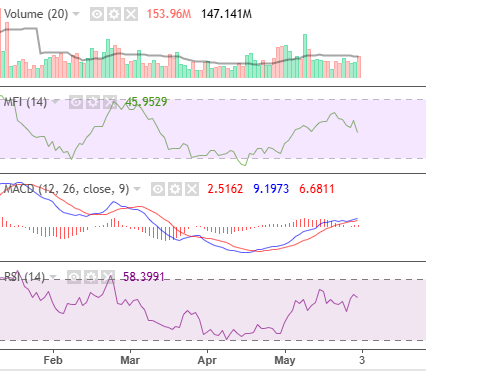
The bearish volume closed strongly on the daily chart, which weakened the market liquidity. Also, the sector experienced more losers than winners during the intraday market. However, the market momentum remained solid. This performance signals that insurance still has potential.
Final Thought
The overall bearish market calls for strategic and analytical fundamental analysis to maintain profitability amid a weak market. Also, risk management is key during this period when indulging in bargain hunting and portfolio rebalancing.