

Market Update For November 2, 2026
Nigeria’s equities market started November trading on a slightly bearish note on Monday, November 2, 2026, reversing two previous sessions of gains as renewed profit-taking in heavyweight stocks dragged the benchmark index into negative territory. The modest decline reflected cautious investor positioning following the strong appreciation recorded in October, with selling pressure concentrated in major banking, industrial and consumer goods stocks.
Although the market’s decline was relatively marginal, the underlying trading pattern pointed to a broader weakening in investor sentiment, as more stocks recorded losses than gains. The development suggests that some investors are beginning to secure profits after the market’s sustained rally, while others remain selective in positioning their portfolios ahead of further corporate earnings releases and macroeconomic developments.
The banking sector was among the major contributors to the market’s weakness, as ACCESSCORP, ZENITHBANK, GTCO, FIDELITYBK, ETI and UBA closed lower. The losses across these highly capitalised counters weighed on the benchmark index, highlighting the influence of banking stocks on overall market performance. TRANSCORP, NESTLE, VITAFOAM, ARADEL and DANGSUGAR also experienced significant selling pressure, reflecting profit-taking across other major sectors of the exchange.
The performance of these stocks is particularly important given their market capitalisation and influence on the All-Share Index. While the broader market continues to maintain substantial year-to-date gains, sustained weakness in heavyweight equities could limit further appreciation in the near term. Investors may therefore require stronger earnings expectations, attractive valuations and positive corporate developments to justify additional exposure to stocks that have recorded significant price increases.
Nevertheless, buying interest remained evident in selected counters, particularly among some mid- and small-cap stocks. The performance of CONHALLPLC, LIVESTOCK, MANSARD and UPDC indicated that investors were still identifying opportunities in equities with positive short-term momentum. However, the gains recorded in these stocks were insufficient to offset losses in the larger-capitalised counters, leaving the market with a negative overall performance.
DANGCEM also attracted considerable trading interest, recording the highest transaction value for the session and trading above its 52-week high. The stock’s performance suggests continued investor appetite for selected industrial equities, despite the broader market’s cautious direction. Its significant contribution to market turnover further demonstrates the concentration of trading activity in a few highly capitalised stocks.
The market’s performance at the beginning of November also comes against the backdrop of a strong October rally, which reinforced the Nigerian Exchange’s position as one of the better-performing equity markets. However, the transition into a new month could encourage portfolio rebalancing, particularly among institutional investors seeking to lock in gains, adjust sector exposures and reposition ahead of the final stretch of the year.
Oil Market
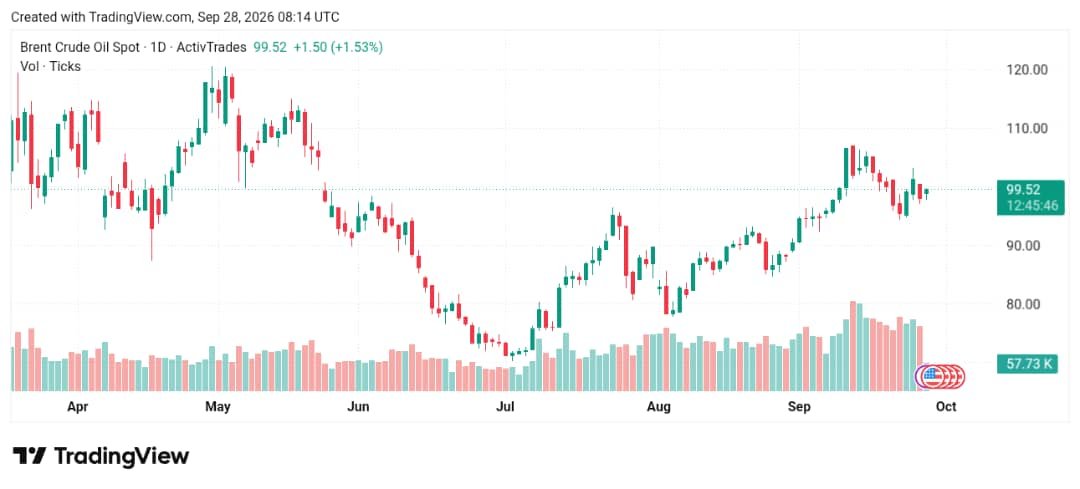
In the international commodities market, crude oil prices recorded a sharp decline on Monday as renewed diplomatic engagements between Iran and Qatar raised expectations of a possible resolution to the ongoing US-Israeli war with Iran. The development eased immediate concerns about prolonged disruptions to crude oil supplies from the Middle East, triggering a sell-off in international oil benchmarks.
Reports indicated that Iranian negotiators had held discussions with Qatari mediators over several days, with a draft proposal aimed at ending the conflict reportedly being circulated. An official familiar with the negotiations also indicated that another meeting could take place, raising expectations of progress towards a diplomatic settlement.
Market sentiment received further support after Iranian President Masoud Pezeshkian disclosed that Supreme Leader Ayatollah Mojtaba Khamenei had granted the government certain authorities regarding peace negotiations. The statement strengthened expectations that diplomatic channels could provide a pathway towards reducing geopolitical tensions and restoring stability to regional energy supplies.
Consequently, Brent crude futures declined by $6.78, representing a 6.0% drop, to $106.65 per barrel by 1357 GMT. Similarly, US West Texas Intermediate crude fell by $6.37, or 6.1%, to $97.75 per barrel. Both benchmarks had earlier touched intraday lows of $105.86 and $97.12, respectively, as traders reacted to the possibility of reduced supply disruptions.
The sharp decline highlights the extent to which geopolitical developments have influenced oil price movements in recent weeks. Concerns surrounding the security of energy infrastructure, shipping routes and crude production facilities in the Middle East have continued to generate volatility, with prices responding rapidly to developments involving Iran and other regional stakeholders.
However, the easing of geopolitical risk does not necessarily eliminate the possibility of further price increases. The success or failure of ongoing negotiations, the security of major oil transportation routes and the extent of any remaining supply disruptions will remain important determinants of market direction. Consequently, investors and energy market participants are likely to maintain close attention to diplomatic developments in the region.
Technical Analysis and Market Outlook
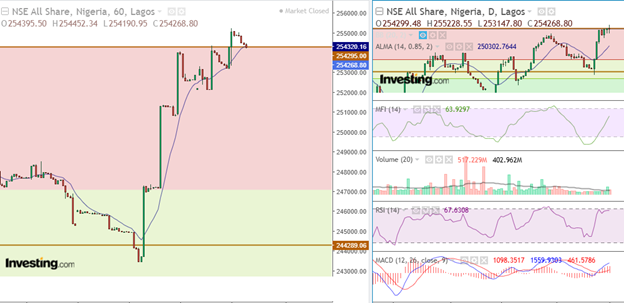
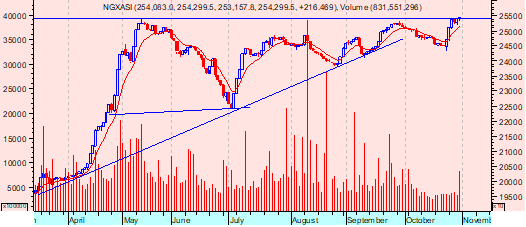
From a technical perspective, the Nigerian equities market’s marginal decline suggests a temporary loss of upward momentum following the strong recovery recorded in the preceding sessions. The All-Share Index remains around the 254,000-point region, indicating that the broader bullish structure is still intact, although the emergence of widespread losses suggests that the market may be entering a period of consolidation.
The inability of the benchmark index to sustain its previous upward movement reflects the growing influence of profit-taking, particularly in stocks that have recorded substantial appreciation. This development is not unusual following an extended market rally, as investors often reassess their positions and secure gains before committing additional capital.
The 254,000-point region remains an important immediate support level, while the 255,000–256,000-point range represents the next resistance zone. A sustained move above this resistance area could strengthen bullish sentiment and create room for further appreciation. Conversely, a decisive break below the immediate support level could expose the market to additional selling pressure and encourage a deeper short-term correction.
Market breadth will also remain an important indicator of the sustainability of any recovery. A return to positive breadth, supported by improved participation across banking, industrial, consumer goods and insurance stocks, would suggest that buying interest is broadening beyond a few selected counters. On the other hand, continued dominance of declining stocks could indicate that the market’s upward momentum is becoming increasingly concentrated.
In the near term, investors are likely to maintain selective exposure, with greater attention on corporate earnings, dividend prospects, valuation levels and the sustainability of recent price gains. Banking stocks will remain particularly important given their significant influence on market capitalisation and index performance. Industrial and consumer goods stocks could also attract interest depending on earnings expectations, operating costs and the outlook for domestic demand.
Developments in the fixed-income market and monetary policy environment may further influence equity allocation decisions. Changes in Treasury bill and bond yields could affect the relative attractiveness of equities, particularly for institutional investors balancing risk and return across asset classes. Meanwhile, inflation trends, exchange-rate stability and liquidity conditions will remain important considerations for the domestic investment climate.
Overall, the Nigerian equities market retains a strong year-to-date performance, but the opening session of November indicates that investors are becoming more cautious following the recent rally. The sustainability of the bullish trend will depend on renewed demand for fundamentally strong stocks, improved market breadth and the ability of heavyweight counters to regain positive momentum.
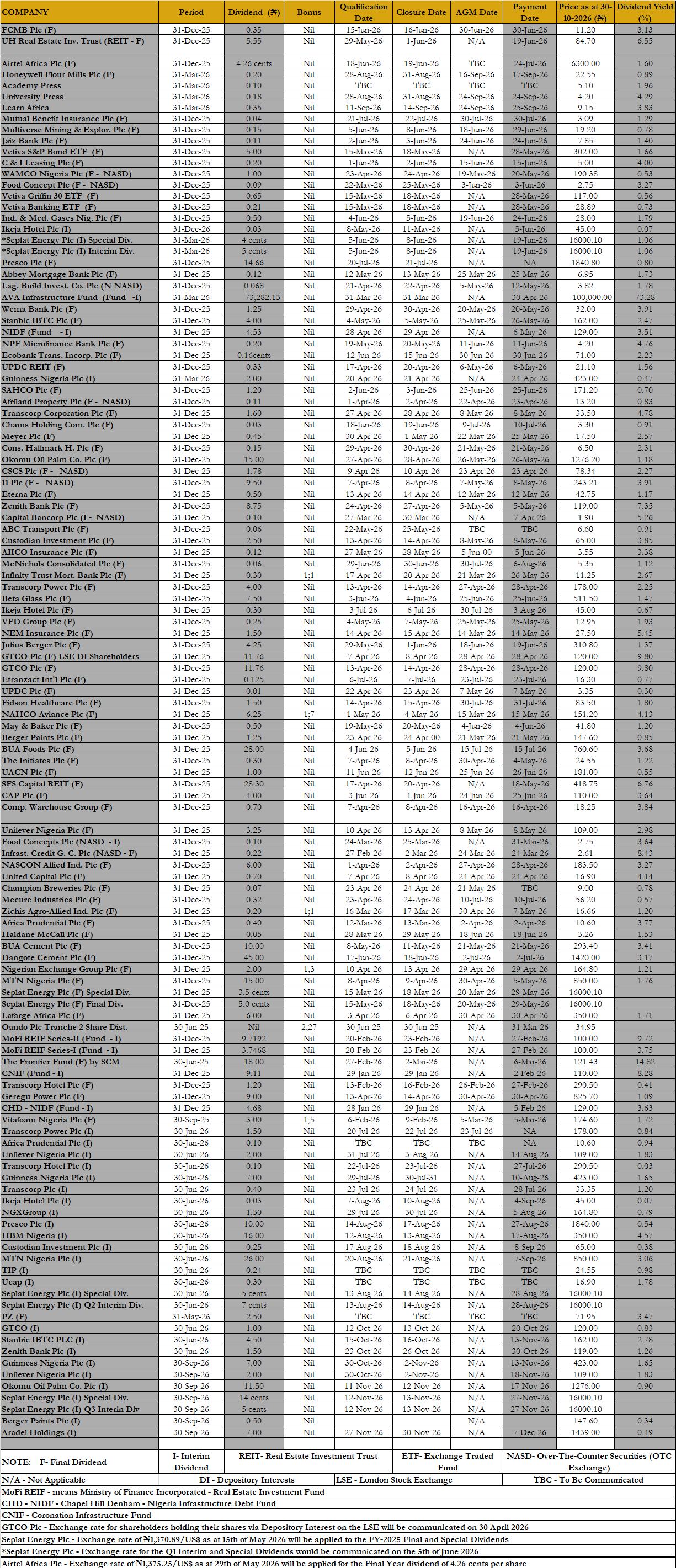
The NGX All-Share Index declined by 54.28 points, representing a 0.02% loss, to close at 254,245.21 points from 254,299.49 points recorded in the previous trading session. Consequently, market capitalisation decreased by ₦35.25 billion to ₦165.08 trillion, while the market’s year-to-date return moderated to 63.38%. Trading activity weakened, with total volume declining by 48.15% to approximately 517.23 million shares, valued at ₦47.48 billion, across 53,932 deals. HONYFLOUR dominated trading by volume with 74.19 million shares, accounting for 14.34% of total transactions, while DANGCEM recorded the highest transaction value at ₦13.44 billion, representing 28.31% of the day’s total value. MTNN and GTCO followed among the leading stocks by value, while ACCESSCORP and GTCO also featured prominently in volume contribution. Market breadth remained negative, with 44 decliners against 23 advancers, while 79 equities closed unchanged, reflecting sustained selling pressure across the exchange. In terms of market movements, DANGCEM traded above its 52-week high at ₦1,490.00, while CHAMPION, SUNUASSUR, CORNERST, INTENEGINS and INTBREW traded at new 52-week lows. Top Gainers: CONHALLPLC advanced by 10.00% to ₦7.15, LIVESTOCK gained 9.77% to ₦14.60, MANSARD rose 9.30% to ₦11.75, UPDC appreciated 7.46% to ₦3.60, while NPFMCRFBK added 7.14% to close at ₦4.50. Top Losers: CHAMPION declined by 10.00% to ₦8.10, ARADEL shed 9.99% to ₦1,296.00, VITAFOAM lost 9.97% to ₦157.20, SOVRENINS fell 9.79% to ₦2.12, while INTENEGINS depreciated 9.74% to close at ₦1.76 each.